
Views: 0 Author: Site Editor Publish Time: 2025-11-11 Origin: Site


When electrical systems are exposed to extreme conditions, choosing the right conductor is no longer optional—it is critical to system reliability, safety, and performance. Nickel plated copper wire has become the preferred choice for engineers, product designers, and procurement professionals working with high-temperature applications, from aerospace electronics to industrial heating systems. Meitong Conductivity Alloy Materials (Jishui County) Co., Ltd., with its advanced manufacturing facilities and specialized research, offers high-quality nickel-plated copper solutions designed to withstand thermal, oxidative, and mechanical stress while maintaining exceptional electrical conductivity. Selecting the right wire ensures your projects perform consistently under stress, reduces downtime, and extends the life of your equipment.
In engineering terms, “high-temperature” refers to environments where conductors experience sustained heat that exceeds the typical operating range of standard copper or aluminum wires. For many industrial and automotive applications, this can start at around 200°C, while specialized aerospace or laboratory systems can reach 450°C or even higher.
High temperatures affect conductors in multiple ways. The first concern is oxidation, which occurs when oxygen in the air reacts with the copper surface, forming a non-conductive layer that increases resistance and reduces efficiency. Over time, this can lead to overheating, energy loss, or even catastrophic failure if left unchecked.
Another challenge is insulation degradation. Even high-temperature-rated insulation materials can become brittle or break down after prolonged exposure to heat, which increases the risk of short circuits or open circuits. Additionally, copper itself may undergo annealing, a process in which its microstructure softens under heat. This reduces tensile strength and mechanical stability, making the wire more prone to stretching, deformation, or breaking during installation or operation.
Finally, repeated heating and cooling cycles, known as thermal cycling, can accelerate all of these failure modes. Engineers specifying wiring for high-temperature applications must therefore consider not only the maximum operating temperature but also the long-term durability, oxidation resistance, and mechanical robustness of the conductor. Nickel-plated copper wire addresses all these concerns by combining a highly conductive copper core with a protective nickel coating, offering both electrical efficiency and long-term reliability.
Nickel plating transforms standard copper wire into a high-performance conductor capable of surviving extreme conditions. The process involves depositing a thin, uniform layer of nickel over a highly conductive copper core, creating a bimetallic wire that provides the best of both worlds: copper’s excellent conductivity and nickel’s thermal and chemical resilience.
One of the primary benefits of nickel plating is its ability to resist oxidation. Copper oxidizes rapidly at elevated temperatures, forming copper oxide on the surface, which increases resistance and weakens the conductor. Nickel, in contrast, forms a stable, non-reactive surface layer that protects the underlying copper from chemical attack. This barrier allows the wire to retain its conductivity even in high-temperature, corrosive, or oxidizing environments, such as engine compartments, furnace controls, or aerospace electronics.
Nickel plating also slows the annealing process. By providing a heat-resistant outer layer, the plating reduces the rate at which copper softens under continuous thermal stress. This is especially important in applications requiring frequent bending, vibration resistance, or mechanical stability, ensuring that the wire maintains its integrity over the operational lifespan.
A key advantage of nickel-plated copper wire is that it retains the low electrical resistance of copper. While nickel is less conductive than copper, the layer is thin enough that the copper core dominates current flow, providing the same high performance as pure copper. This allows system designers to maintain precise voltage control and current capacity without increasing conductor size, which is particularly valuable in weight-sensitive or space-constrained applications such as aerospace wiring harnesses or high-density industrial control panels.
Moreover, nickel-plated copper wires maintain stable resistance over time, which is critical for sensors, heating elements, and other precision electrical components. Unlike bare copper wires that gradually oxidize and increase in resistance, nickel-plated wires continue to carry current efficiently, reducing energy loss, minimizing heat buildup, and ensuring operational safety.
Beyond thermal and electrical advantages, nickel plating provides mechanical reinforcement. The coating increases tensile strength, improves wear resistance, and enhances fatigue life, making wires more durable during installation and in-service use.
This is particularly beneficial in high-vibration environments, such as automotive engines or robotic machinery, where movement and stress can otherwise damage or break uncoated copper wires. Nickel-plated copper wires also resist abrasion during handling or routing through tight conduits, reducing the need for frequent replacements or maintenance.
The combination of heat resistance, mechanical strength, and oxidation protection makes nickel-plated copper wire suitable for many demanding industries.
Aerospace: Aircraft avionics, control systems, and engine sensors operate at high temperatures and face significant oxidative stress. Nickel-plated copper wire ensures long-term reliability while maintaining precise signal transmission under thermal cycling and vibration.
Industrial Heating Elements: In electric furnaces, industrial heaters, and laboratory thermal devices, nickel-plated copper wire carries high currents without surface degradation. Its oxidation resistance and thermal stability ensure precise temperature control and prevent premature wire failure.
Automotive Sensors and Engine Harnesses: Engine compartments, exhaust sensors, and turbocharger wiring are exposed to elevated temperatures, moisture, and chemical contaminants. Nickel plating protects the copper core from corrosion while maintaining low-resistance current paths for sensor accuracy and reliability.
High-Temperature Cable Assemblies: Robots, industrial automation systems, and power distribution panels often require bundled wires that can handle continuous high-temperature operation. Nickel-plated copper wire preserves both electrical performance and physical flexibility, making assembly easier and reducing maintenance downtime.
Power Electronics: Inverters, converters, and motor controllers for electric vehicles and industrial machinery generate localized heat hotspots. Nickel-plated copper conductors resist oxidation and maintain conductivity, ensuring system efficiency and safety.
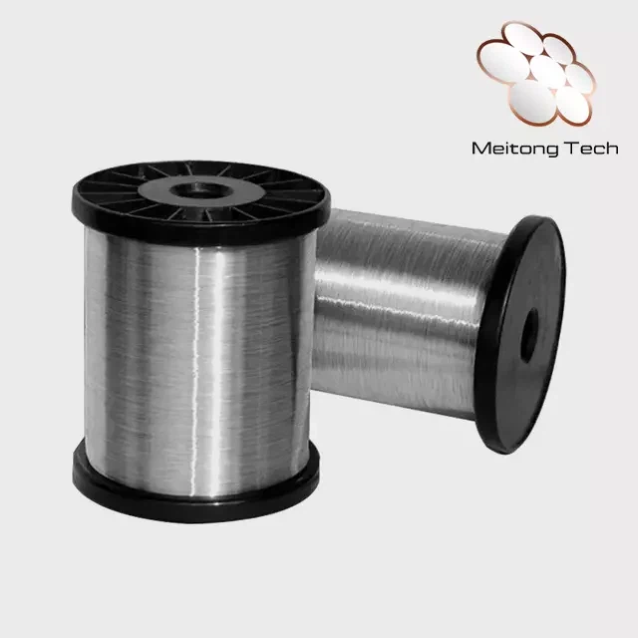
Selecting the right nickel-plated copper wire requires careful attention to technical specifications. Engineers and procurement teams should evaluate plating thickness, nickel composition, conductor size, strand count, and soldering compatibility.
Plating Thickness & Nickel Composition: Thicker plating improves oxidation resistance and wear protection but may slightly reduce overall conductivity. Selecting the right thickness involves balancing durability with electrical performance. High-purity nickel coatings ensure long-term stability in harsh environments.
Conductor Size and Strand Count: Larger cross-sectional areas carry higher currents without excessive heating, while multi-strand constructions enhance flexibility and improve heat dissipation. For applications with frequent bending or routing through confined spaces, finely stranded nickel-plated wires reduce the risk of fatigue failures.
Soldering and Flux Compatibility: Nickel-plated copper wires often require activated fluxes or specialized soldering techniques. Proper soldering ensures strong joints without compromising plating integrity, which is crucial for high-reliability applications in aerospace, automotive, or industrial electronics.
Temperature Ratings: Verify the maximum continuous operating temperature. While standard nickel-plated copper wire can handle 200–300°C, specialty constructions with thicker plating and high-grade insulation can exceed 450°C.
Voltage and Current Capacity: Datasheets should specify ampacity and voltage rating under high-temperature conditions. These parameters are essential for preventing overheating, voltage drops, or insulation failure.
Proper handling during assembly is critical to preserve the performance of nickel-plated copper wires.
Soldering Best Practices: Use pre-tinning techniques with appropriate flux and controlled heat application. Avoid prolonged exposure to high temperatures to maintain the nickel layer and copper core properties.
Brazing Considerations: High-temperature brazing can join multiple wires or attach to components without damaging the plating, provided proper temperature control and filler materials are used.
Crimping Tips: Use tooling designed for plated wires to ensure secure mechanical connections without damaging the surface. Correct compression preserves electrical continuity and prevents future corrosion.
Quality Assurance Tests: Request tests such as oxidation resistance, tensile strength, continuity at elevated temperature, and visual inspection of plating. These checks reduce the risk of field failures and ensure the wire meets stringent operational requirements.
While nickel-plated copper wire may appear more expensive than bare copper upfront, long-term savings are significant. Reduced downtime, fewer replacements, and lower warranty claims translate into tangible cost benefits.
For example, in a high-vibration industrial motor, uncoated copper may need replacement annually due to oxidation and fatigue. Nickel-plated copper wires, however, can operate reliably for multiple years. This reduces labor costs, replacement material expenses, and unexpected downtime, providing a clear return on investment.
Investing in high-performance wire also supports compliance with safety standards, avoids regulatory penalties, and improves overall operational reliability, making nickel-plated copper wire a value-driven choice for demanding applications.
Meitong Conductivity Alloy Materials produces nickel-plated copper wire engineered for high-performance applications. Our wires are guaranteed to maintain conductivity up to X°C, feature custom nickel-coating thickness options, and are fully compatible with standard and specialized soldering processes. Multiple production bases and strict quality control ensure consistent product reliability. For engineers, designers, and procurement teams, technical datasheets and samples are available for testing in real-world conditions. Our nickel-plated copper wires are ideal for automotive electronics, aerospace applications, industrial robots, and high-temperature cable assemblies where performance and reliability are paramount.
For systems exposed to elevated temperatures and harsh oxidizing environments, nickel-plated copper wire ensures stable conductivity, enhanced mechanical performance, and long-term reliability. Meitong Conductivity Alloy Materials delivers high-quality solutions that meet the demands of aerospace, automotive, and industrial applications. To evaluate these wires in your system, contact us today to request a sample, datasheet, or technical consultation and explore our Bimetal Fine Wire solutions for high-temperature applications.
Q1: What maximum temperatures can nickel-plated copper wire withstand?
A1: Standard constructions handle 200–300°C, while specialty wires with thicker plating and high-grade insulation can exceed 450°C.
Q2: Why is nickel plating necessary on copper wires?
A2: Nickel plating prevents oxidation, maintains low electrical resistance, and improves mechanical strength in high-temperature or high-vibration environments.
Q3: Can nickel-plated copper wire be soldered with standard techniques?
A3: Yes, but activated flux or specialized soldering processes are recommended to ensure strong and reliable connections.
Q4: In which industries is nickel-plated copper wire most commonly used?
A4: Aerospace electronics, automotive engine harnesses, industrial heating systems, high-temperature cable assemblies, and power electronics all benefit from nickel-plated copper wire.


