
Views: 0 Author: Site Editor Publish Time: 2025-11-18 Origin: Site


When it comes to designing or upgrading a solar installation, a common question arises: “Does paying more for copper really reduce long-term system costs?” For small-to-medium EPCs, rooftop solar decision-makers, and PV system buyers, this is far from a trivial question. The choice of solar cables directly influences system efficiency, safety, durability, and return on investment. At Meitong Conductivity Alloy Materials, we specialize in providing premium copper core cables, including H1Z2Z2-K and PV1-F models, engineered for high performance in demanding environments. In this article, we break down the technical and practical differences between copper and alternative materials, explore relevant standards, and provide detailed scenarios where copper proves to be the smart choice.
Solar cables are purpose-built electrical conductors specifically designed for photovoltaic applications. Unlike standard electrical wires, these cables must handle continuous exposure to sunlight, high DC voltages, and extreme weather conditions. Typically, solar cables are single-core with tinned copper conductors, providing resistance against corrosion and oxidation. The insulation is usually cross-linked polyethylene (XLPO), which offers excellent thermal resistance, flexibility, and long-term mechanical durability. This design ensures that cables can safely operate for decades without significant degradation, even when subjected to high currents and harsh environmental conditions.
Tinned copper is particularly important because it protects the conductor from oxidation, which can occur in high humidity or marine environments. Over time, untinned copper can develop a layer of corrosion that increases resistance, reduces efficiency, and can even lead to hotspots. XLPO insulation complements this by resisting cracking, UV degradation, and high temperatures, making the cable suitable for rooftop, open-air, and embedded PV applications.
Solar cables are not just passive conductors; they are the arteries of a photovoltaic system. They link individual PV modules in series and parallel configurations to form strings, carry the combined DC output to inverters, and connect inverters to batteries or the electrical grid. Each connection point relies on cables that maintain high conductivity and insulation integrity. Poor cable selection can lead to voltage drop, overheating, or even fire hazards, directly affecting the system’s energy yield, safety, and lifespan.
Additionally, cables must meet the demands of the balance-of-system (BOS) components, such as junction boxes, combiner boxes, and disconnect switches. High-quality solar cables ensure minimal energy loss and maintain system stability, particularly in large rooftop installations or industrial PV arrays where cable runs can exceed 50 meters per string.
Electrical conductivity is one of the most critical factors when selecting cables for PV installations. Copper has significantly higher conductivity than aluminum, which allows the same current to be carried with a smaller cross-section. This directly reduces voltage drop along the cable run.
Voltage drop is more than a technical specification; it has practical implications. High voltage drop in PV strings decreases inverter input voltage, reducing overall energy yield. Over time, this can accumulate into measurable energy losses. Copper cables also maintain cooler temperatures under load, reducing thermal stress on insulation and connectors. For long runs or high-efficiency installations, copper cables can result in measurable gains in total energy production.
Copper is mechanically stronger and more resilient than aluminum. It resists bending fatigue, crushing, and accidental impact, making it highly reliable in installations that experience physical stress, vibration, or wind load. Aluminum, while lightweight, can be more prone to deformation, fracturing, and loosening at connection points.
Additionally, copper is naturally corrosion-resistant when tinned and maintains integrity in acidic or coastal environments. This long-term reliability reduces the frequency of maintenance and replacements, which is particularly important for rooftop PV arrays and industrial installations. Copper also presents a lower theft risk for temporary storage, as it requires more effort to extract and scrap, unlike aluminum, which is easier to handle.
Although aluminum cables have a lower upfront cost, evaluating installed cost versus lifecycle cost often favors copper. Copper allows smaller cross-sections, meaning less conduit space is required, installation labor can be reduced, and connectors and junction boxes can be smaller. Over a 25-year PV system lifetime, the combination of lower energy loss, higher durability, and reduced maintenance can make copper cables more cost-effective in practice.
For example, a 100-meter DC run using copper may allow a 16 mm² cross-section, whereas aluminum would require 25 mm² to carry the same current. This reduction simplifies installation, reduces conduit fill, and saves on labor, offsetting the initial material cost difference. When every watt matters, as in high-efficiency rooftop arrays or commercial PV installations, copper’s higher conductivity and lower voltage drop translate directly to higher energy yield and ROI.
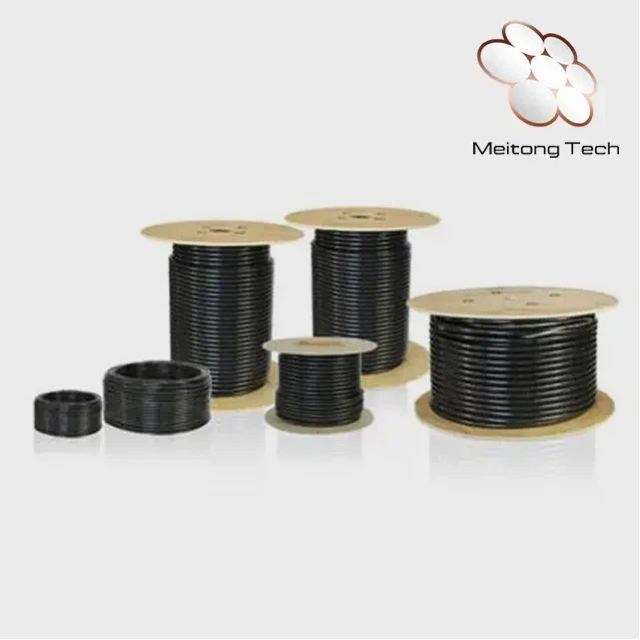
H1Z2Z2-K and PV1-F are internationally recognized PV cable standards, defining electrical, thermal, mechanical, and environmental performance. PV1-F has been widely used in traditional rooftop systems, providing reliable insulation, UV resistance, and adequate current-carrying capacity for standard DC voltages. H1Z2Z2-K, however, is increasingly the standard for modern, high-voltage installations, offering superior flame retardancy, low-smoke emission, wider operating temperature ranges, and enhanced mechanical performance.
H1Z2Z2-K cables are designed for voltages up to 1,500 V DC, making them suitable for next-generation rooftop or industrial PV arrays. They can withstand higher mechanical stress, temperature fluctuations, and fire hazards, offering peace of mind for EPCs and system owners.
Choosing cables compliant with H1Z2Z2-K or PV1-F standards ensures a safer, longer-lasting installation. H1Z2Z2-K cables reduce the risk of fire propagation in case of short circuits, while their low-smoke emission enhances safety for maintenance personnel. Both standards guarantee resistance to UV light, ozone, and temperature extremes, ensuring the cables maintain their integrity for decades. Compliance with these standards also simplifies inspection and certification, providing confidence for building authorities, insurance providers, and end-users.
In high-efficiency PV systems, every watt of energy counts. Voltage drop becomes more significant as panel output increases. Copper cables reduce these losses, particularly on long strings or in multi-panel arrays, ensuring stable system output. In high-value installations, the energy yield gained from copper cables can justify the higher initial cost, making copper an investment in efficiency rather than just a material choice.
For installations with long DC runs or complex routing across rooftops, facades, or industrial facilities, copper’s higher conductivity and flexibility are major advantages. Smaller cross-sections allow easier routing through conduits and junction boxes, reducing stress on bends, connectors, and fasteners. Copper’s superior fatigue resistance ensures cables withstand repeated thermal cycles and minor movements without cracking or failure.
Exposed PV installations are subject to sunlight, high temperatures, wind, and chemical pollutants. Copper’s mechanical and chemical stability makes it ideal for such environments. Even in high-humidity coastal zones or industrial areas with chemical exposure, tinned copper cables resist corrosion and maintain electrical integrity. For rooftop PV installations exposed to heavy snow loads, wind, or frequent maintenance, copper provides a level of reliability unmatched by standard aluminum cables.
Aluminum cables are lighter than copper, which can be a decisive factor in very long cable runs or elevated arrays. Reduced weight simplifies transport, handling, and mounting, particularly in utility-scale solar farms. When structural load or labor constraints are critical, aluminum alloys can be a practical choice.
In massive PV farms where hundreds of kilometers of cable are required, capital cost becomes a primary concern. Aluminum cables provide significant cost savings while still delivering acceptable electrical performance when properly sized. In such applications, slight increases in voltage drop or cross-sectional area are manageable due to the large scale of the system.
Recent advances in aluminum alloy solar cables have improved conductivity, mechanical strength, and thermal performance, narrowing the gap with copper. Modern designs allow aluminum to perform adequately in scenarios previously dominated by copper. While still slightly less efficient in terms of voltage drop, these cables are now capable of serving long-distance runs and high-capacity installations where weight and cost are priorities.
Selecting the right solar cables is critical to achieving a high-performing, safe, and durable PV system. Copper cables offer lower voltage drop, superior durability, and enhanced resistance to harsh environmental conditions, making them the preferred choice for high-efficiency rooftop arrays, long DC runs, and exposed installations. Meitong Conductivity Alloy Materials provides copper core H1Z2Z2-K and PV1-F cables that meet modern standards, ensuring reliable energy delivery, safety, and long-term performance. For product inquiries, specifications, or sample requests, contact us today to explore the best solutions for your solar installations.
Q1: What are the main advantages of copper solar cables over aluminum?
A1: Copper offers higher conductivity, lower voltage drop, better mechanical strength, and superior corrosion resistance, ensuring long-term reliability and efficiency.
Q2: When should I choose H1Z2Z2-K over PV1-F?
A2: H1Z2Z2-K is recommended for high-voltage, next-generation PV systems with demanding safety and fire-resistance requirements. PV1-F works well for standard rooftop arrays.
Q3: How do I confirm cables meet my system requirements?
A3: Check voltage rating, current capacity, insulation type, bending radius, UV resistance, and relevant standard compliance markings (EN50618/TÜV/UL).
Q4: Can aluminum alloy cables replace copper in all scenarios?
A4: Modern aluminum alloys can replace copper in large-scale projects where weight and cost are prioritized, but copper remains superior for high-efficiency, long DC runs, and exposed installations.


