
Views: 0 Author: Site Editor Publish Time: 2026-06-29 Origin: Site


Bare copper degrades rapidly when exposed to harsh environmental conditions. Engineers rely on protective plating to ensure long-term reliability and physical integrity. Choosing the right plating requires balancing electrical performance, environmental survivability, and strict project budgets. Over-specifying drives up bill-of-materials costs unnecessarily. Under-specifying risks catastrophic joint failure, severe signal attenuation, or galvanic corrosion in the field. When analyzing tin plated copper wire vs silver plated copper wire, you must evaluate technical trade-offs carefully. This guide provides a rigorous, standards-based framework for design engineers. We will evaluate both plating options based on frequency requirements, operating temperatures, and termination methods. You will learn exactly how to match the right conductor to your specific field application. Understanding these differences helps prevent premature system failures while optimizing manufacturing efficiency.
Tin plating is the industry standard for cost-effective oxidation prevention, optimal for standard voltage applications up to 150°C.
Silver plating maximizes surface conductivity for high-frequency applications (leveraging the skin effect) and withstands operating temperatures up to 200°C+.
While silver tarnishes over time, silver oxide remains highly conductive, unlike copper oxide, maintaining joint integrity in critical applications.
Sourcing consistency from a reliable bimetal fine wire supplier is critical to avoiding localized plating defects that cause premature termination failures.
Bare copper possesses excellent inherent electrical properties. However, it faces severe vulnerabilities during real-world deployments. High humidity, marine environments, and chemical exposure accelerate copper oxidation drastically. Copper oxide acts as a strong electrical insulator. This severely increases contact resistance at vital termination points. System efficiency drops as heat generation rises.
We use plating to create a robust physical barrier. This preserves the core copper conductor beneath it. Plating also delivers specific, highly desirable secondary benefits. These include enhanced solderability on automated assembly lines. It also provides reduced skin resistance for signal transmission. Some platings offer superior thermal protection against localized melting.
Evaluating these materials requires strict adherence to industry benchmarks. You should assess physical plating thickness against published ASTM standards. You must also consider required operating temperature limits for the final environment. Furthermore, your chosen termination methods dictate material suitability. Crimping and soldering impose different mechanical stresses on wire coatings. Finally, lifecycle cost limits influence the final selection matrix.
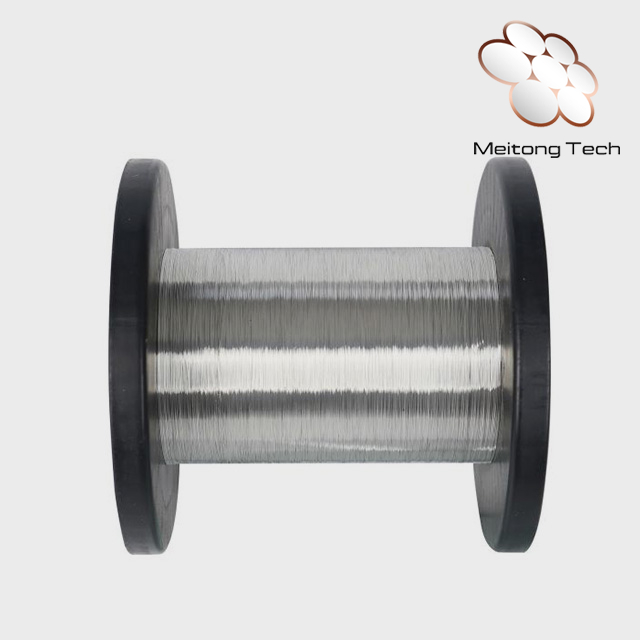
Manufacturers widely utilize tin plated copper wire for corrosion resistance. The material profile typically meets rigorous ASTM B33 standards. Tin offers a soft, highly malleable coating. This softer surface readily accepts solder during rapid assembly. It deforms perfectly inside mechanical crimps to create airtight seals.
Engineers generally rate tin for continuous use up to 150°C. Exceeding this thermal threshold causes structural problems. Tin can degrade or diffuse rapidly into the base copper beneath it. This rapid diffusion forms intermetallic compounds. These newly formed compounds complicate subsequent soldering operations. They also weaken mechanical joints over long lifespans.
This material offers several primary advantages for standard production:
It provides exceptional defense against moisture and standard environmental corrosion.
It eliminates the need for aggressive soldering fluxes on the production floor.
It remains highly cost-effective at massive manufacturing scales.
You will find tin plating prominently in marine electronics. It dominates industrial control panels globally. It features heavily in standard automotive wiring harnesses. We also rely on it for low-to-medium frequency electrical interconnects.
Critical applications demand much higher performance metrics. We specify silver plated copper wire for high frequency signals to meet these extreme needs. This specialized material follows stringent ASTM B298 standards. Silver offers the absolute highest electrical and thermal conductivity of any known metal.
High-frequency transmission introduces unique physical behaviors. In RF, microwave, and high-speed digital interconnects, current travels primarily along the outer surface. Engineers call this phenomenon the skin effect. Silver plating minimizes signal attenuation in this critical outer layer. It allows high-speed data to travel without significant degradation.
Silver safely operates at ambient temperatures exceeding 200°C. Manufacturers frequently pair it with high-performance dielectrics. Extruded PTFE (Teflon) serves as the standard companion insulation. This combination survives incredibly harsh aerospace environments.
Many designers worry unnecessarily about silver tarnishing. Silver reacts naturally with atmospheric sulfur. This forms a dark patina called silver sulfide. Unlike rust or copper oxide, this tarnish remains entirely electrically conductive. It prevents sudden, dangerous spikes in contact resistance across aging connectors.
We see silver plating utilized in commercial aerospace wiring. It excels in military RF communications. Precision medical equipment relies on it entirely for sensor accuracy. It also secures critical audio and video interconnects against signal loss.
Comparing these two materials requires a direct feature-to-outcome analysis. We evaluate them across three major engineering categories.
At low frequencies or DC power, you will see a negligible conductivity difference. Tin and silver perform similarly here. Electrons travel evenly through the entire cross-section of the wire. However, at high frequencies, silver outperforms tin significantly. It boasts much lower surface resistance. High-frequency signals ride strictly on the outer perimeter. Contact resistance is another crucial metric for mechanical mating. Silver provides superior, highly stable contact resistance over time. This stability is critical for high-current busbars. It also protects sensitive mechanical relays from catastrophic thermal runaway.
Solderability plays a massive role in modern production lines. Tin is generally easier to solder in standard PCB manufacturing. It melts predictably and forms strong metallurgical bonds quickly. Silver solders very well but requires tight thermal control. High heat causes severe leaching during automated assembly. Leaching occurs when silver dissolves directly into the liquid solder joint. This weakens the physical connection drastically. Different corrosion types affect each metal differently. Tin resists ambient moisture much better than bare copper. Silver resists high heat exceptionally well. Silver also withstands chemical off-gassing from certain advanced insulations. Fluoropolymers often release corrosive gasses during extreme thermal cycles. These specific gasses would otherwise degrade tin coatings instantly.
Silver functions as a precious metal globally. Commodity market fluctuations heavily impact its daily price. This creates budgetary challenges for long-term production runs. Tin offers predictable, highly stable pricing. This economic reality makes tin the default choice for most projects. You should only upgrade your design to silver if specific thermal or frequency thresholds are clearly crossed.
Feature | Tin Plated Copper | Silver Plated Copper |
|---|---|---|
Standard Voltage/Low Frequency | Excellent Performance | Excellent Performance |
High Frequency (RF/Microwave) | Poor (High Attenuation) | Superior (Low Attenuation) |
Maximum Operating Temperature | 150°C | 200°C+ |
General Solderability | Highly forgiving | Requires strict thermal control |
Primary Environmental Resistance | Resists moisture exceptionally well | Resists heat and chemical off-gassing |
Even the best material specifications fail during poor manufacturing. You must understand common implementation risks before signing a purchase order.
Manufacturing risks usually manifest in two primary ways:
Porosity and flaking: Poorly controlled plating baths cause severe mechanical issues. They lead to microscopic pores across the conductor. They also create overly brittle plating layers. This brittle layer easily flakes off during standard crimping processes. Exposed copper then oxidizes rapidly.
Concentricity: Uneven plating thickness alters the wire physically. It changes the outer diameter randomly. It also degrades expected electrical characteristics unpredictably along a single spool.
Vetting your manufacturing partner is an absolute requirement. Sourcing from a highly reliable bimetal fine wire supplier guarantees structural consistency. You must require documented compliance with strict IPC and ASTM standards. Verify the minimum plating thickness in microns before approving bulk orders. Assess their internal quality assurance protocols closely. You need continuous spool consistency across large multi-kilometer orders. Inconsistent plating leads directly to localized overheating in the field. Finally, always verify RoHS and REACH compliance. This rule applies to both the base metal and the complex plating processes. Regulatory failures will stall your entire production timeline.
Making the final selection comes down to clear, data-driven shortlisting logic.
Choose Tin if your application involves standard electrical frequencies. Select it if your operating temperatures remain safely under 150°C. Tin is mandatory when your project budget demands high-volume scalability without price volatility.
Choose Silver if the project involves complex RF or microwave frequencies. Select it if operating temperatures exceed 150°C, thereby requiring specialized PTFE insulation. Silver is necessary when the design demands zero-compromise contact resistance over a 20-year lifecycle.
Take proactive steps before finalizing your engineering bill of materials. Request precise plating thickness samples from your supplier. Ask for comprehensive, lab-tested data sheets. Conduct localized crimp and solder tests in your facility. Verify the mechanical integrity of every termination point before full-scale deployment.
A: Yes, provided the application specifically requires high-frequency signal integrity or high-temperature survival. Silver mitigates skin effect losses in RF systems and safely operates above 200°C. For basic power transmission at low frequencies, the cost premium of silver offers no measurable return on investment. Tin remains the optimal choice for standard use.
A: Silver tarnishes rather than oxidizing like copper. It reacts with atmospheric sulfur to form a dark patina known as silver sulfide. Unlike non-conductive copper oxide, this tarnish is highly conductive. It rarely impedes electrical connections. Your high-frequency signals and mechanical contacts remain stable despite visual discoloration over time.
A: You must take extreme care to avoid galvanic corrosion when mating dissimilar metals. This risk multiplies in humid environments. In dry, highly controlled environments, engineers mix them commonly. However, you should thoroughly model the resulting contact resistance prior to mass deployment. Always test mixed terminations under peak operational loads.


