
Views: 0 Author: Site Editor Publish Time: 2026-06-05 Origin: Site


Aerospace engineering demands peak performance, strict weight reduction, and extreme thermal tolerance from every component. Flight environments push materials to their absolute limits. They leave no margin for error in electrical systems. You face constant pressure to optimize these constraints while maintaining fail-safe reliability. Silver-plated copper wire offers a highly specific balance of exceptional conductivity, reliable temperature resistance, and vital high-frequency signal integrity. However, it requires rigorous quality control to mitigate environmental risks during manufacturing and deployment.
Our objective is to provide a comprehensive technical evaluation of this wire for aerospace applications. We will compare it against common alternatives and outline critical procurement standards. You will learn how material synergy enhances avionics systems. We will show you how to prevent galvanic corrosion and exactly what to demand from manufacturers to ensure safety.
Silver-plated copper wire combines the mechanical flexibility and cost-effectiveness of copper with the high-temperature tolerance (up to 200°C) and superior solderability of silver.
It is the optimal choice for high-frequency avionics due to the "skin effect," where high-frequency signals travel predominantly along the highly conductive silver layer.
The primary implementation risk is galvanic corrosion ("Red Plague"), which must be mitigated through strict ASTM B298 plating thickness standards and proper handling.
Choosing an AS9100-certified military and aerospace fine wire supplier is mandatory to ensure void-free plating and defect-free insulation extrusion.
Aerospace cable systems face punishing conditions. They must survive extreme cold, high heat, and intense mechanical stress. Pure copper oxidizes rapidly at high temperatures. Pure silver is too heavy and costly for entire wiring harnesses. Combining them creates a composite material. This material addresses specific vulnerabilities found in modern aircraft operations. When you use silver plated copper wire for aerospace, you leverage the distinct physical properties of two superior metals.
Modern avionics rely on massive data transfer rates. Radar systems, sensors, and flight computers transmit signals at incredibly high frequencies. High-frequency alternating current does not distribute evenly through a conductor. It concentrates near the outer surface. We call this phenomenon the "skin effect."
Avionics data naturally travels along the surface of the conductor. The silver plating provides near-perfect surface conductivity. Silver has the highest electrical conductivity of any metal. Because the signal travels through this outer layer, it encounters minimal electrical resistance. This characteristic minimizes signal attenuation in critical systems. It prevents data loss between crucial flight control modules. You get the electrical performance of pure silver without the prohibitive weight.
Aircraft wiring zones experience radical temperature shifts. Unpressurized fuselage zones drop well below freezing. Engine nacelles and exhaust areas radiate immense heat. Standard insulation and pure copper fail under these extremes. Copper oxidizes heavily above 150°C. Silver plating raises the operational temperature ceiling dramatically.
When engineers pair silver-plated copper with extruded PTFE (Teflon) insulation, the system becomes highly robust. It safely operates continuously at 200°C. The silver barrier prevents the underlying copper from oxidizing at high temperatures. The wire survives high-heat engine proximity flawlessly. It maintains structural and electrical integrity where standard materials would easily degrade.
Reducing aircraft weight is a primary engineering goal. Lighter aircraft consume less fuel and carry larger payloads. SWaP optimization drives many design choices. Silver-plated copper contributes significantly to these goals.
You can optimize SWaP by relying on these key advantages:
Gauge Reduction: The superior conductivity of silver allows engineers to specify finer wire gauges (AWG). You do not sacrifice current-carrying capacity.
Weight Savings: Finer wire requires less copper and thinner insulation jackets. This directly reduces overall aircraft weight.
Routing Efficiency: Thinner wire bundles take up less space. They allow for more compact airframe designs and tighter harness routing.
Power Efficiency: Lower electrical resistance minimizes power dissipation as heat. This keeps electrical enclosures cooler and more efficient.
You will not find silver-plated copper in every basic circuit. Its specific properties make it essential for specialized sub-systems. Engineers deploy it strategically to maximize performance and safety.
Data buses act as the nervous system of an aircraft. They connect flight control systems, radar arrays, and high-speed telemetry. These systems demand pristine signal clarity. Impedance control is completely non-negotiable. Variations in resistance can cause signal reflection or data packet loss. Silver plating ensures uniform surface conductivity. This uniformity maintains tight impedance tolerances across long cable runs. Reliable data transmission keeps navigation and communication systems functioning perfectly.
Aircraft structures are highly dynamic. They endure constant engine vibration, turbulence, and pressure cycling. Solid wire quickly succumbs to metal fatigue in these conditions. It becomes brittle and snaps. Engineers demand stranded wire configurations.
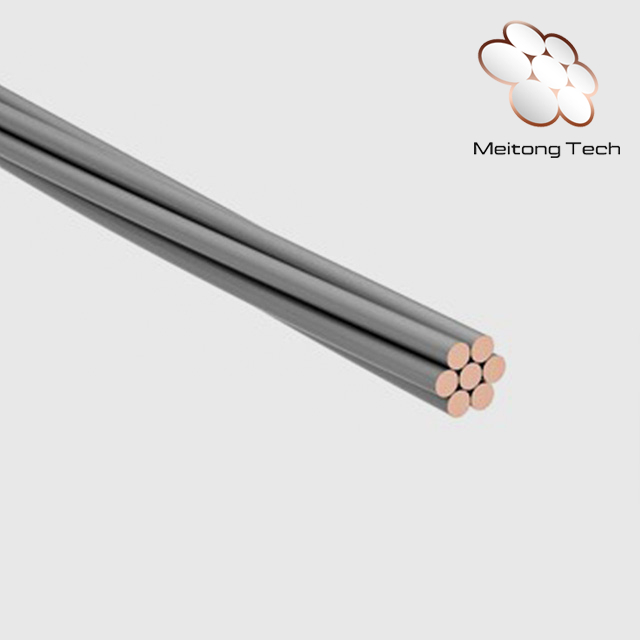
When you utilize silver plated copper stranded wire for aerospace wiring, you gain immense flexibility. Stranded wire withstands the high-vibration environments of airframes and landing gear bays. The individual strands bend independently. This flexibility distributes mechanical stress. Furthermore, the silver plating acts as a dry lubricant between strands. It reduces internal friction and further prevents premature mechanical failure.
Aerospace electronic enclosures face extreme space constraints. Engineers must fit more computing power into smaller boxes. This requires fine wire gauges for internal board-to-board connections. These connections must withstand rigorous assembly processes.
Silver-plated wire excels in tight PCB-level integration. It offers exceptional solderability. Silver wets instantly with standard solders. You do not need aggressive, corrosive fluxes to create a secure joint. Corrosive fluxes can damage delicate microelectronics over time. The silver plating guarantees reliable, clean solder joints in microscopic avionics assemblies. This dramatically improves manufacturing yield and long-term reliability.
No engineering material is perfect. Silver-plated copper carries a specific environmental vulnerability. The aerospace industry refers to this vulnerability as the "Red Plague." Understanding this mechanism is vital for safe implementation.
We must objectively explain cuprous oxide corrosion. Silver and copper occupy different positions on the galvanic series. Silver is a noble metal. Copper is more active. If the silver plating is scratched, overly thin, or highly porous, the underlying copper becomes exposed.
If this exposed wire encounters moisture and oxygen before or during the insulation process, a dangerous reaction occurs. A galvanic cell forms between the silver and the copper. The silver acts as a cathode. The copper acts as an anode. The copper core rapidly degrades into cuprous oxide. This oxide forms a distinct reddish powder. It physically weakens the wire. Eventually, it destroys the electrical conductivity completely. The wire fails silently inside its insulation.
You can entirely prevent the Red Plague through strict quality control. The risk primarily arises from poor manufacturing practices, not from the material concept itself.
Best Practices for Mitigation:
Specify Minimum Plating Thickness: Industry standards typically mandate a 40 microinches minimum plating thickness. This complies with ASTM B298 standards. This thickness ensures a continuous, non-porous barrier over the copper.
Control the Manufacturing Environment: Facilities must strictly control humidity and temperature. They must eliminate moisture exposure before the PTFE insulation seals the wire.
Enforce Proper Storage Protocols: Bare stranded wire must reside in environmentally sealed containers. It must remain protected prior to the extrusion of the dielectric layer.
Common Mistakes to Avoid:
Never accept wire from uncertified facilities that lack climate control.
Do not allow aggressive handling during spooling. High tension can stretch the wire and crack the silver plating.
Avoid prolonged storage of uninsulated wire in humid warehouses.
Engineers usually choose between three plating materials for copper wire. Each material serves a distinct operational envelope. Understanding the trade-offs ensures you select the correct specification for your aerospace project.
Plating Material Comparison Matrix
Material | Conductivity Impact | Max Temperature Rating | Solderability | Galvanic Risk | Space Environment Risk |
|---|---|---|---|---|---|
Tin-Plated Copper | Standard | 150°C | Excellent | Low | High (Tin Whiskers) |
Silver-Plated Copper | Highest | 200°C | Excellent | High (Red Plague) | Low |
Nickel-Plated Copper | Reduced | 260°C+ | Poor (Needs strong flux) | None | Low |
Tin provides a lower cost and excellent solderability. It protects copper adequately in benign environments. However, it is thermally limited to 150°C. It is completely unsuitable for high-temp aerospace zones like engine compartments. Furthermore, tin presents a catastrophic risk in space applications. In vacuum environments, tin can grow microscopic conductive filaments called "tin whiskers." These whiskers bridge contacts and cause catastrophic short circuits in satellites.
Procuring aerospace grade silver plated copper wire provides the ideal balance for most flight systems. It delivers excellent solderability and exceptional high-frequency conductivity. Rated to 200°C, it survives demanding environments. It serves as the undisputed best choice for high-frequency data applications and mid-to-high heat zones. While it requires galvanic corrosion mitigation, standard manufacturing controls easily manage this risk.
Nickel offers extreme durability. It is thermally superior, handling continuous temperatures up to 260°C. It is completely immune to the Red Plague. However, it suffers from significant drawbacks. Nickel has much lower conductivity than silver or tin. It introduces higher electrical resistance into the circuit. It also resists standard soldering. Technicians must use specialized, highly acidic fluxes for soldering, which complicates PCB integration and adds cleanup steps.
Material specifications look perfect on paper. However, executing those specifications requires a flawless manufacturing partner. The aerospace sector leaves no room for sub-standard wire drawing or plating inconsistencies. You must rigorously vet your supply chain.
You must outline non-negotiable standards before writing a purchase order. Commercial-grade wire has no place in an aircraft. Look for strict adherence to foundational military and aerospace standards.
MIL-W-22759 (SAE AS22759): This standard dictates the exact performance requirements for fluoropolymer-insulated wire. It ensures the insulation withstands abrasion, thermal shock, and chemical exposure.
ASTM B298: This specification governs the silver plating process itself. It details testing methods, including the sodium polysulfide test, to guarantee coating continuity and verify exact plating thickness.
AS9100 Quality Management: This certification goes beyond standard ISO 9001. It adds stringent aerospace-specific requirements for risk management, traceability, and defect prevention.
Choosing the right partner mitigates implementation risks entirely. When you evaluate a military and aerospace fine wire supplier, you must demand absolute transparency and technical capability.
Look for these critical capabilities:
Traceability of Raw Materials: The supplier must prove the origin of their copper. They should strictly use OFC (Oxygen-Free Copper) for the core. OFC prevents internal oxidation and ensures maximum pliability.
In-House Testing Capabilities: Do not rely entirely on third-party labs. A capable manufacturer performs continuous in-line testing. They verify wire concentricity with laser micrometers. They perform X-ray fluorescence to ensure accurate plating thickness. They conduct accelerated aging tests to guarantee thermal performance.
Custom Stranding and Spooling: Improper handling damages the wire before it ever ships. The supplier must feature advanced spooling controls. Precise tension management prevents micro-abrasions to the silver layer during the winding process. Custom stranding capabilities ensure the final geometry exactly matches your flexibility requirements.
Silver-plated copper wire remains an exceptional, high-performance material for modern aerospace applications. It solves complex engineering challenges by merging superior electrical conductivity with robust thermal endurance. Engineers secure high-frequency data integrity while simultaneously reducing crucial aircraft weight.
However, successful implementation demands strict vigilance. You must respect the realities of galvanic corrosion. Procurement must focus heavily on stringent quality control rather than just the lowest price. Uncertified wire introduces unacceptable risks into flight systems.
We encourage engineering and procurement teams to thoroughly review their project requirements. Compare your thermal and high-frequency needs against SPCW specifications. Establish strict compliance mandates for all incoming materials. Reach out to our engineering team today to request a technical consultation or a detailed specification sheet for your next airframe design.
A: Yes, silver sulfide or tarnish may occur on exposed wire ends due to atmospheric sulfur. However, this surface tarnish generally does not degrade electrical conductivity or solderability. Unlike copper oxide, which acts as an insulator, silver tarnish remains highly conductive and poses little risk to circuit performance.
A: Standard minimums usually hover around 40 microinches (approximately 1 micron). This thickness ensures a continuous, pore-free barrier against the underlying copper core. Strict adherence to ASTM B298 and military standards at this thickness prevents the onset of cuprous oxide corrosion.
A: Yes. Silver is a standard, highly reliable choice for satellite and spacecraft wiring. Unlike tin-plated alternatives, silver does not grow conductive "whiskers" in a vacuum environment. This stability prevents catastrophic short circuits in zero-gravity space operations.


