
Views: 0 Author: Site Editor Publish Time: 2026-08-16 Origin: Site


High-density communication racks and mobile telecom shelters operate under strict weight budgets. Thermal limitations further complicate these critical environments. This pushes engineers to look beyond traditional solid copper wiring. While heavily criticized in data networking due to performance drops and fire risks, Copper-Clad Aluminum (CCA) is gaining traction. Specific DC power delivery applications benefit greatly from its unique material properties. Evaluating CCA requires stripping away misleading marketing claims. You must understand the physical trade-offs and termination risks involved. We will explore precise engineering scenarios where weight reduction truly justifies the switch. You will learn the fundamental physics governing these composite conductors. We will outline strict guidelines for safe installation and routing. Finally, we provide a clear technical framework to help you decide if this material suits your next telecom project.
Weight Reduction: CCA reduces overall cable weight by 30% to 40% compared to pure copper, driven by aluminum’s lower specific gravity.
Application Viability: Dedicated DC power leads in communication equipment are safer use cases for CCA than high-frequency PoE data cables, provided ampacity is correctly upsized.
Installation Caveats: The primary risk is not conductivity, but termination; galvanic corrosion and thermal expansion demand bimetallic-rated lugs and strict oxidation protocols.
Decision Matrix: Specifying a lightweight power lead requires balancing the chassis weight budget against the need for thicker wire gauges to match copper's electrical resistance.
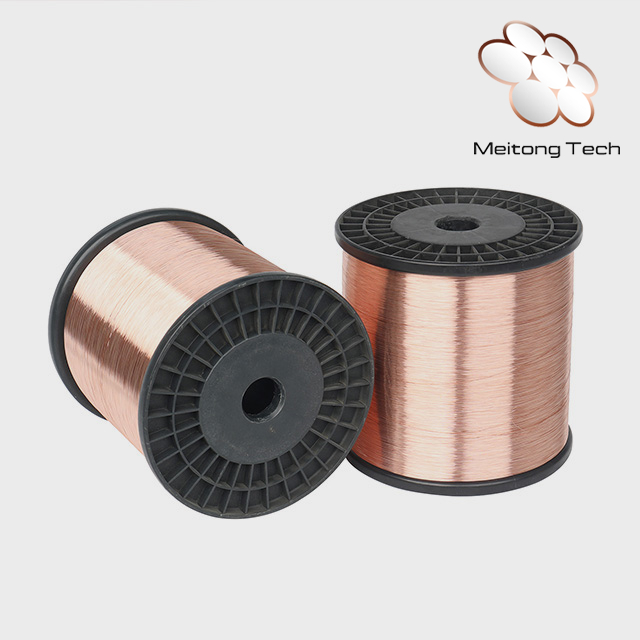
Copper cladding over an aluminum center creates a unique composite conductor. Manufacturers typically apply a 10% to 15% copper layer by volume. The remaining 85% to 90% forms the lightweight aluminum core. This specific manufacturing ratio balances surface conductivity against extreme weight savings. It delivers a highly specialized product for modern engineering.
You must compare the specific gravity of both metals directly. Copper features a dense structure of roughly 8.89 grams per cubic centimeter. Aluminum offers a significantly lower density of about 2.70 grams per cubic centimeter. This stark physical contrast drives the primary engineering benefit. You remove heavy bulk from equipment racks without losing essential surface properties.
Material | Specific Gravity (g/cm³) | Relative Weight Profile | Primary Engineering Use |
|---|---|---|---|
Pure Copper | 8.89 | Heaviest | Maximum conductivity in limited space |
Pure Aluminum | 2.70 | Lightest | Utility grid transmission lines |
CCA (10% Copper) | ~3.32 | 30-40% lighter than Copper | Weight-restricted chassis wiring |
Flexibility matters immensely when routing power inside tight chassis designs. CCA Stranded Wire maintains this essential flexibility beautifully. It bends easily around internal components and tight corners. It retains the immense weight advantages of an aluminum core. Solid aluminum wires often snap under simple mechanical stress. Stranded configurations distribute these physical loads safely across multiple thin conductors.
Many engineers mistakenly apply the "skin effect" logic to DC power. The skin effect benefits high-frequency AC data transmission greatly. High-frequency signals travel predominantly along the outer copper layer. In DC power leads, however, the entire cross-sectional area carries the electrical current. The overall resistance dictates performance. You save significant physical weight. However, the physical wire gauge must increase to carry the required load safely.
IT professionals often push back strongly against CCA materials. Widespread industry skepticism exists for very valid reasons. Engineering forums feature countless horror stories regarding network failures. Technicians frequently report burned Power over Ethernet (PoE) cables. They complain bitterly about dropped packets and fragile wire runs. We must acknowledge this sysadmin backlash openly before designing new systems.
You must separate data transmission from primary power delivery. The technical boundary remains critical for safe operations. High-frequency data cables fail rapidly when manufactured poorly. Brittleness destroys thin 24 AWG solid conductors during basic installation. High DC resistance causes significant voltage drops over long network runs. Heat builds up quickly inside tightly bundled PoE cables.
However, power delivery presents a completely different engineering environment. You use much thicker gauges for CCA wire communication equipment power leads. Internal chassis DC wiring operates under controlled conditions. Battery interconnect cables face entirely separate electrical constraints. These applications manage pure DC loads over very short distances. They operate under distinct thermal and electrical parameters. This makes the material a viable engineering choice. You specify it strictly when overall equipment weight becomes the primary bottleneck.
You cannot swap solid copper for composite materials blindly. A strict ampacity penalty applies to every single installation. Industry rules of thumb require careful up-sizing of the conductor. You must increase the wire size by one to two AWG steps. This matches the current-carrying capacity of traditional bare copper.
Calculate the exact DC load of the communication equipment.
Identify the required pure copper AWG size for that load.
Consult ampacity charts for aluminum-based conductors.
Increase the wire gauge by at least one full AWG step.
Verify the new diameter fits within your routing conduits.
Engineers evaluate cables using strict volume versus weight metrics. Even after upsizing the gauge, the composite cable wins structurally. It remains significantly lighter than the equivalent copper wire. This forms the perfect Lightweight Power Lead for mobile deployment. However, the thicker diameter requires larger raceways. It demands a wider bend radius inside the enclosure. You must plan internal routing paths carefully during the design phase.
Dense telecom enclosures generate massive amounts of localized heat. Heat dissipation limits dictate material choices continuously. Stranded composites manage thermal cycling slightly differently than pure copper. Thermal expansion coefficients differ between the copper skin and aluminum core. Larger surface areas from upsized gauges help dissipate heat faster. Airflow within the chassis must accommodate these thicker cable bundles. Continuous load ratings require careful ambient temperature calculations to prevent overheating.
Termination presents the absolute highest risk during any installation. Galvanic corrosion threatens long-term reliability constantly. Chemical reactions occur when dissimilar metals interact directly. Copper and aluminum react poorly under sustained electrical loads. Moisture accelerates this corrosive process rapidly in outdoor telecom shelters. You must manage this chemical relationship proactively.
We mandate strict hardware requirements for safe equipment operation. You must use specific termination components to prevent micro-arcing. Standard copper lugs will fail eventually. They cannot accommodate the thermal expansion of the aluminum core.
Select dual-rated bimetallic lugs marked specifically as AL7CU or AL9CU.
Apply high-quality anti-oxidant joint compounds generously before crimping.
Use calibrated torque wrenches for every mechanical connection.
Inspect completed terminations to ensure no exposed aluminum cores remain.
Active cooling environments introduce constant micro-vibrations. Fans and blowers shake equipment racks continuously during operation. Stranded configurations handle these micro-vibrations extremely well. Solid cores often suffer from rapid work hardening. They eventually snap under prolonged mechanical stress. Stranded composite cables provide superior longevity in vibrating environments.
Compliance verification protects your communication infrastructure legally and physically. You must check National Electrical Code (NEC) guidelines carefully. Look for Underwriters Laboratories (UL) certifications on the jacket. These specific standards apply directly to internal equipment wiring. Avoid non-compliant materials heavily marketed as pure copper equivalents. Fraudulent labeling causes severe safety hazards and voids equipment warranties.
Buying the right material requires systematic engineering evaluation. You need a reliable framework to prevent procurement errors. We provide specific success criteria for hardware buyers. Ask yourself if weight limits your design absolutely. Aerospace communication payloads represent ideal use cases. Mobile cell on wheels (COWs) require strict weight management for transport. Weight-capped telecom towers benefit massively from lighter cabling runs. If physical weight restricts your payload, this composite makes perfect sense.
Supplier vetting separates successful projects from dangerous catastrophic failures. You must audit a manufacturer's internal cladding process thoroughly. Some factories use cheap electroplating methods. Others utilize advanced mechanical cladding techniques. Mechanical cladding creates a permanent metallurgical bond. It ensures the thin copper skin will not flake.
Flaking during stripping destroys the connection integrity immediately. It exposes the bare aluminum directly to atmospheric oxygen. This causes instant oxidation and increases contact resistance. High contact resistance leads to dangerous thermal events. Request detailed material data sheets before approving any vendor. Always order sample spools for termination testing before massive rollouts.
CCA is never a simple drop-in replacement for pure copper. It remains a highly specialized material choice. It solves specific, critical weight constraints in equipment chassis design. When applied correctly, it drastically reduces the physical burden on telecom structures. However, it demands strict adherence to engineering best practices.
Your next steps require precise engineering calculations. Advise your team to request comprehensive material data sheets immediately. Order small sample spools strictly for physical termination testing. Calculate the exact AWG upsizing required for your specific DC load. Train your installation technicians on the proper use of anti-oxidant compounds and bimetallic lugs. Proper preparation ensures long-term reliability in your communication infrastructure.
A: No. Standard network guidelines strictly require pure copper for structural integrity. Pure copper provides necessary heat dissipation in PoE applications. CCA exhibits higher resistance, causing dangerous heat buildup in thin data cables. You should reserve composite materials strictly for dedicated, upsized power leads.
A: It typically reduces overall cable weight by 30% to 40%. The exact reduction depends on the specific cladding ratio and insulation jacket weight. Aluminum’s significantly lower specific gravity drives this weight advantage, making it ideal for mobile telecom units.
A: Yes. You must use dual-rated (bimetallic) lugs marked AL7CU or AL9CU. You also require anti-oxidant paste. These specific components prevent thermal expansion failures. They also stop galvanic corrosion at the physical contact point between dissimilar metals.


