
Views: 0 Author: Site Editor Publish Time: 2026-06-18 Origin: Site


Selecting the right wire requires a careful balance. You need superior high-frequency conductivity alongside mechanical flexibility and rugged environmental durability. Bare copper oxidizes quickly under high heat. Tinned copper lacks high-frequency efficiency. Silver-plated copper fills this critical gap perfectly. Engineers specify silver plating to mitigate the high-frequency "skin effect." It also offers exceptional resilience in high-temperature environments. It ensures rapid, highly reliable solderability during manufacturing. This guide provides a precise technical evaluation framework. We will help you specify the exact stranding, plating thickness, and compliance standards for your unique use case. You will learn how to align physical flexibility, plating depth, and electrical demands effectively. By understanding these critical variables, you avoid costly system failures. You ensure optimal performance across the most demanding industrial installations.
Conductivity vs. Flexibility: Higher stranding counts increase flexibility and fatigue resistance, essential for dynamic routing.
Plating Thickness Matters: Silver plating percentages (typically 1.25% to 10%) must match the thermal and frequency demands of the application.
Application-Driven Specs: Aerospace, high-frequency audio, and medical devices require different gauge (AWG) and insulation pairings.
Vendor Verification: Always verify materials against ASTM B298 standards to avoid counterfeit or sub-par plating.
You must evaluate operational temperatures before making any material selections. Environmental heat acts as a primary stressor on internal wiring. Standard bare copper oxidizes rapidly when exposed to elevated temperatures. Silver plating prevents copper oxidation effectively. It protects the core conductor even when ambient temperatures surge. High-performance systems frequently operate continuously at 200°C. You will almost always see these high-heat wires paired alongside extruded PTFE or Teflon insulation. These robust fluoropolymer materials handle extreme heat without melting or degrading. They complement the protective qualities of the silver layer.
Next, you need to separate your electrical demands from your mechanical demands. High-frequency AC signals behave differently than direct current. High frequencies force the electrical current to travel along the outer surface of the wire. Engineers call this phenomenon the "skin effect." Because silver stands as the most conductive metal available, this outer plated layer becomes critical. The silver layer maintains excellent signal integrity and reduces attenuation. It prevents data loss in high-frequency transmission lines. If you use standard tinned wire, you risk severe signal degradation at high gigahertz ranges.
Mechanically, you must assess your specific installation environment. Will the wire remain completely static after installation? Does the application require constant dynamic movement? Robotic arms and automated machinery demand high flex cycles. Repeated bending creates internal stress. Static control panels easily tolerate stiffer solid cores or low-strand configurations. You must define these physical constraints early in the design phase. Matching the mechanical ruggedness to the environment prevents premature wire fatigue.
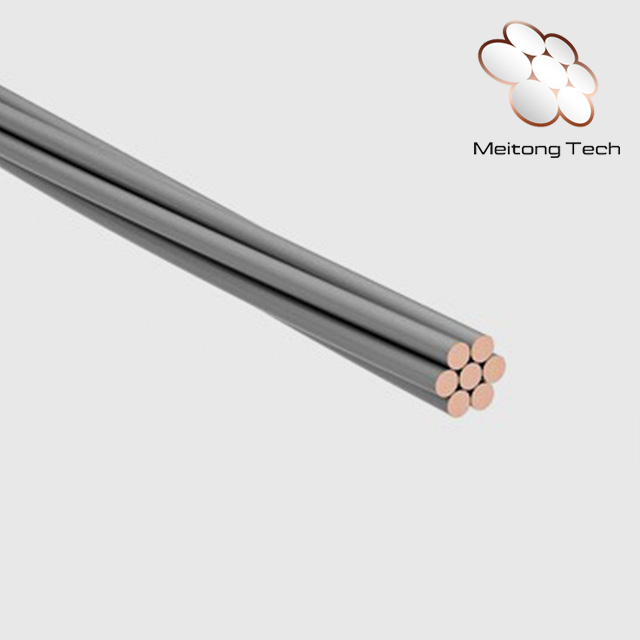
Stranding configuration dictates the physical performance and flexibility of your cable. Standard concentric stranding arranges individual wires in distinct circular layers around a central core. It offers a smooth outer surface and maintains a uniform diameter. Bunch stranding twists wires together randomly without geometric precision. It provides higher flexibility but yields a slightly irregular profile. Rope lay stranding groups smaller stranded bundles into one larger conductor complex. This specific design handles extreme flexing effortlessly.
Strand count plays a massive role in longevity. Higher strand counts dramatically improve flex-fatigue resistance. For example, using a 19/32 configuration instead of a 7/36 configuration changes the mechanical dynamics completely. These higher counts create flexible silver plated copper stranded wire. Using such flexible configurations reduces mechanical fatigue in robotic systems. It prevents internal wire breakage during continuous motion in aerospace applications.
Plating thickness directly impacts thermal endurance and electrical performance. Manufacturers typically categorize plating thickness by silver weight percentages. Standard industry options include 1.25%, 2.5%, 6%, and 10%. Thicker plating handles much higher continuous operating temperatures safely. It also improves soldering ease during component assembly. You must match the plating depth to your operational environment.
Silver Plating Thickness Comparison
Silver Percentage | Continuous Temp Rating | Primary Application Focus |
|---|---|---|
1.25% | Up to 150°C | General electronics, standard audio hook-ups |
2.5% | Up to 200°C | PTFE insulated military and aerospace wiring |
6.0% | Up to 250°C | High-frequency signals, extreme heat zones |
10.0% | Above 250°C | Specialized harsh environments, severe chemical exposure |
American Wire Gauge (AWG) size requires careful engineering calculation. You must determine the acceptable voltage drop for your specific circuit length. Current carrying capacity changes drastically based on the ambient temperature and insulation type. Factor in the specific low resistance of silver-plated copper during your calculations. Silver boasts significantly higher conductivity than standard bare copper. This increased efficiency sometimes allows engineers to specify slightly smaller wire gauges. Dropping a gauge size saves weight and physical space without sacrificing necessary current load capabilities.
Aerospace and medical devices operate under strict zero-failure tolerances. In these sectors, system failure costs lives. Weight reduction remains a massive priority in aerospace manufacturing. Engineers must balance low total weight against extreme high-temperature resistance. Jet engines and satellite systems subject wiring to severe thermal cycling. Medical devices share similar rigorous demands. In medical implants or advanced diagnostic tools, signal purity is non-negotiable. Silver plating ensures that delicate biosignals travel without interference or degradation over time.
Complex or restricted routing presents distinct mechanical challenges. Tight electrical cabinets and ultra-dense circuit boards restrict physical movement. Bend radius constraints demand highly specialized wire construction. You need ultra-fine stranding to prevent internal micro-fractures during tight installations. If thick strands bend too sharply, they snap internally. Therefore, engineers routinely specify silver plated stranded wire for tight installations. This specialized stranding ensures physical integrity remains intact even around severe 90-degree bends.
High-end audio and sensitive instrumentation heavily rely on these premium materials. DIY audiophiles and electronic instrumentation engineers understand the objective benefits. Silver-plated hook-up wire demonstrably improves high-frequency transient response. Because high frequencies travel on the wire surface, the silver layer creates a clearer, faster signal path. Additionally, the silver coating simplifies precision soldering on delicate audio crossover components. You achieve much cleaner solder joints. Better joints directly translate to enhanced sound fidelity and lower baseline noise floors.
Identifying genuine silver plating requires strict operational diligence. Market trust issues persist due to counterfeit or misrepresented materials. Some unreliable suppliers substitute high-grade tin or cheap nickel alloys. Visual inspection provides your first basic clue. Authentic silver exhibits a distinctly bright, high-luster, white finish. However, visual checks alone fall short for critical engineering. Chemical reagent tests offer definitive proof of composition. Nitric acid drops will react differently on silver versus tin. Furthermore, precision micro-ohm resistance measurements verify authenticity accurately. Genuine silver yields measurably lower baseline resistance than tin or nickel equivalents.
Soldering demands highly specific techniques when working with silver. Silver absorbs molten solder extremely rapidly. Wicking becomes a serious and common risk. Solder can quickly travel upward under the insulation layer. This capillary action ruins wire flexibility. It creates rigid, stiff joints prone to snapping under vibration. Furthermore, excessive solder can bridge the gaps between ultra-fine strands.
Best Practices for Soldering:
Use highly responsive, temperature-controlled soldering stations.
Select appropriate mildly activated rosin (RMA) flux to clean surfaces.
Apply heat briefly and precisely to avoid excessive solder wicking.
Use heat sinks on the wire if installing near delicate sensors.
Common Mistakes:
Leaving the hot iron on the solder pad for too long.
Using aggressive acid-based fluxes that corrode delicate fine strands.
Ignoring microscopic solder bridges between adjacent wire terminals.
Insulation compatibility dictates the long-term survival of the cable assembly. Manufacturers most commonly pair silver-plated wire alongside extruded PTFE or FEP insulation. These specific fluoropolymers withstand the extreme temperatures required to process silver wire during manufacturing. Mismatched insulation materials pose severe operational risks. Cheaper PVC plastics melt during high-heat termination. They also fail rapidly under heavy operational heat loads. Always verify the insulation jacket matches the thermal profile of the silver plating.
Compliance standards protect your project from catastrophic material failures. You must ensure the vendor strictly adheres to ASTM B298 standards. This represents the global standard specification for silver-coated soft copper wire. It dictates the testing methods for plating thickness, adhesion, and continuity. Check for full RoHS compliance as well. These official documents prove environmental safety and confirm baseline material purity. Never procure wire from vendors who refuse to supply these certifications.
Customization capabilities separate average suppliers from excellent manufacturing partners. Evaluate suppliers based on their precise wire drawing tolerances. Can they draw wire down to your exact dimensional constraints? Do they routinely offer custom fine stranded wire solutions for proprietary hardware designs? You need a partner capable of scaling to your specific technical needs. Off-the-shelf solutions rarely fit complex aerospace or medical applications perfectly.
Shortlisting Action Plan:
Request detailed engineering datasheets verifying high-frequency attenuation rates and mechanical flex cycles.
Request certified material test reports (MTRs) to guarantee accurate silver plating purity.
Procure small sample spools for internal soldering evaluation and rigorous mechanical stress testing.
Selecting silver-plated copper stranded wire is never a simple one-size-fits-all process. You must carefully align physical flexibility, exact plating depth, and complex electrical demands. Consider the primary environmental stressors before finalizing any choice. High heat, constant motion, and high-frequency signals dictate different stranding and thickness requirements. Protect your engineering designs by verifying material authenticity thoroughly. Adhere strictly to ASTM B298 guidelines to avoid counterfeit materials.
Take proactive steps today to secure your supply chain. We encourage procurement teams and electrical engineers to consult specialized wire manufacturers directly. Do not guess on critical specifications. Request engineering samples for your own laboratory testing. Review detailed technical spec sheets against your exact AWG requirements. By partnering with verified experts, you ensure ultimate system reliability and long-term performance.
A: Solid wire consists of one single thick core. It offers slightly lower signal attenuation but feels highly rigid. Stranded wire bundles multiple smaller wires together. It delivers superior flex-fatigue resistance. Solid wire fits static installations perfectly, while stranded wire thrives in dynamic routing environments.
A: No, it actually offers superior solderability. The silver layer accepts molten solder rapidly and cleanly. However, it requires careful thermal management. Excessive heat causes the solder to wick quickly under the insulation, which stiffens the wire and ruins its physical flexibility.
A: Visual inspection helps immediately. Silver has a brighter, whiter, and highly reflective finish. Tin looks duller and greyer. Furthermore, silver maintains excellent conductivity even if the surface tarnishes slightly over time. Oxidized tin loses surface conductivity rapidly upon exposure to air.
A: Yes, silver does tarnish when exposed to sulfur in the air. It forms silver sulfide. While the wire may appear visually dull or slightly blackened, this tarnish remains highly conductive. It does not degrade electrical performance, unlike non-conductive copper oxide.


