
Views: 0 Author: Site Editor Publish Time: 2025-11-13 Origin: Site


Downtime, unplanned maintenance, and equipment failure in challenging operational environments are not just minor inconveniences—they can cost companies millions annually in lost productivity, emergency repair expenses, and operational delays. For electrical systems, the choice of conductor material plays a critical role in maintaining long-term performance under such stressors. Nickel plated copper wire is increasingly recognized as an ideal solution for extending conductor lifespan, minimizing oxidation and corrosion, and maintaining consistent electrical performance in demanding conditions. Meitong Conductivity Alloy Materials, a leading Chinese manufacturer, leverages decades of R&D and advanced production capabilities to provide premium nickel-plated copper wire designed for industrial, automotive, aerospace, and military applications. By understanding the science, mechanics, and real-world applications behind this product, engineers and maintenance managers can make informed decisions to enhance system reliability.
Electrical conductors operate in a variety of environments, but some settings place extreme demands on wire performance. Harsh environments include high-temperature industrial zones, chemical processing plants, marine atmospheres, automotive engine compartments, aerospace systems, and robotics applications. Several stressors contribute to accelerated degradation, each posing unique risks for bare copper and traditional conductors.
Temperature is one of the most critical factors affecting conductor longevity. In industrial furnaces, automotive engines, or aerospace components, temperatures can regularly exceed 200°C, sometimes reaching peaks above 400°C. Bare copper may begin to oxidize rapidly under such conditions, forming a layer of copper oxide that increases electrical resistance. Over repeated thermal cycles, micro-cracks and structural fatigue may develop, potentially leading to intermittent electrical performance or catastrophic failures. Nickel-plated copper wires can withstand substantially higher temperatures, often in the range of 400–600°C, maintaining both mechanical and electrical integrity for long-term operation.
Oxidation is a natural chemical process where copper reacts with oxygen to form a non-conductive layer. This layer increases contact resistance, reduces signal quality, and can eventually cause open circuits. Environments with high humidity, fluctuating temperatures, or exposure to air pollutants accelerate oxidation. For bare copper, even controlled indoor settings may eventually lead to surface tarnishing, particularly in applications where reliability is critical, such as industrial sensors, automated machinery, or medical devices. The nickel plating acts as a dense barrier to oxygen diffusion, significantly delaying oxidation and preserving the conductive copper core beneath.
In many industrial and automotive settings, electrical conductors encounter aggressive chemicals such as acids, alkalis, salts, oils, or coolant fluids. For example, automotive wiring in engine bays is exposed to antifreeze, battery acids, and fuel vapors, all of which can corrode bare copper rapidly. In industrial plants, vaporized cleaning agents or chemical residues can similarly accelerate conductor degradation. Nickel plating provides excellent chemical resistance, creating a protective shield that prevents aggressive substances from reaching the underlying copper, thus extending service life and maintaining consistent conductivity.
Mechanical stress is another leading cause of wire failure. Conductors in robotics, industrial machinery, vehicles, and aerospace systems endure repeated flexing, vibration, and rubbing against harnesses or conduits. Bare copper strands can fray or fracture under these conditions, causing partial shorts, intermittent signals, or complete failure. Nickel plating reinforces the strands, improving abrasion resistance and helping to maintain structural integrity during repeated flexing and vibration cycles. This is particularly important in industrial robots or automotive harnesses that must operate continuously with minimal downtime.
By addressing each of these stressors, nickel-plated copper wire provides a multifaceted solution for challenging operational environments, ensuring both mechanical durability and electrical stability.
Material selection for conductors is critical. Engineers must weigh corrosion resistance, temperature tolerance, mechanical durability, solderability, and cost. Nickel-plated copper wire offers a unique combination of properties that often surpasses traditional alternatives.
Material | Corrosion Resistance | Temperature Limit | Solderability | Cost | Wear Resistance |
Bare Copper | Low | ~200°C | Excellent | Low | Low |
Tin-Plated Copper | Moderate | ~230°C | Very Good | Moderate | Moderate |
Silver-Plated Copper | High | ~260°C | Excellent | High | Moderate |
Nickel-Plated Copper | Very High | 400–600°C | Moderate | Moderate | High |
Copper Alloys | Varies | 300–500°C | Moderate | Moderate-High | High |
Comparison Insights:
Bare Copper: Excellent conductivity and low cost but vulnerable to oxidation, chemical attack, and abrasion. Lifespan in harsh conditions is limited.
Tin-Plated Copper: Provides some corrosion resistance and improves solderability but has lower mechanical durability under vibration and high heat.
Silver-Plated Copper: Superior conductivity and corrosion resistance but expensive and less wear-resistant under abrasive conditions.
Nickel-Plated Copper: Balances cost, high-temperature tolerance, corrosion resistance, and mechanical robustness, making it ideal for high-stress industrial and automotive applications.
Copper Alloys: Offer mechanical strength but often compromise conductivity and soldering characteristics.
Nickel-plated copper wire is particularly well-suited for applications requiring both electrical performance and mechanical durability, such as sensors, heating elements, industrial robotics, and aerospace wiring.
Nickel plating improves wire performance primarily through the creation of a dense, inert barrier that prevents environmental elements from attacking the copper core. Laboratory studies show that nickel-plated copper maintains surface integrity even after prolonged exposure to high humidity, salt spray, and chemical vapors.
Oxidation Resistance: The nickel layer blocks oxygen diffusion, preventing the formation of copper oxide and maintaining low electrical resistance over time.
Chemical Resistance: Nickel is resistant to most acids, alkalis, and salts, which protects the copper core in chemical-processing plants or automotive environments.
Thermal Stability: Field tests in HVAC and automotive components demonstrate minimal change in conductivity after thousands of hours at elevated temperatures.
Academic research and industry data corroborate these findings. Studies on high-temperature oxidation resistance show that nickel plating significantly slows degradation, even when exposed to temperatures that would rapidly oxidize bare copper. These factors combine to reduce maintenance costs and prevent unscheduled downtime, ensuring that critical systems continue operating reliably.
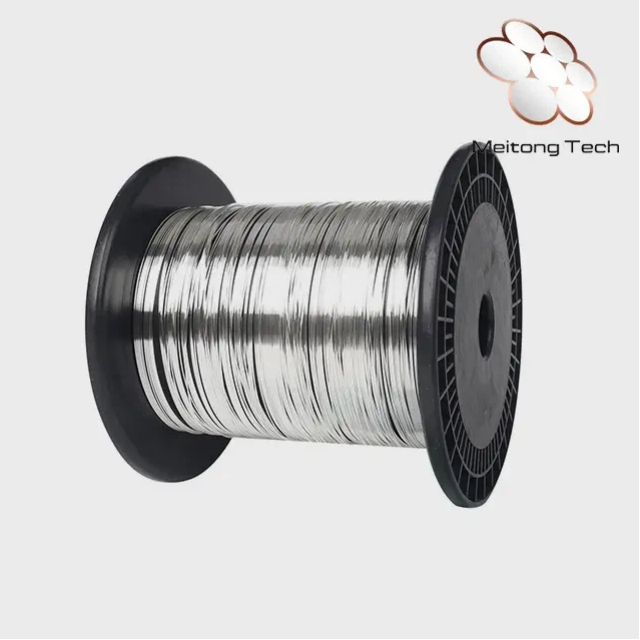
In addition to chemical and thermal protection, nickel plating enhances mechanical performance. The plating provides a hard surface that resists abrasion during handling, assembly, and operation. Benefits include:
Strand Cohesion: Prevents individual copper strands from fraying during flexing or vibration.
Reduced Assembly Damage: Easier handling during harnessing or bending without risk of micro-fractures.
Flex Fatigue Resistance: Extends lifecycle in applications where repeated bending occurs, such as robotic arms or automotive harnesses.
Tensile Strength: Provides extra mechanical support, reducing the risk of breakage in tensioned wiring or vibration-prone applications.
Overall, nickel-plated copper wire ensures that wires not only survive harsh environments but also maintain structural integrity throughout their operational life.
Using nickel-plated copper wire reduces inspection frequency and simplifies maintenance procedures. Some recommended practices include:
Visual Inspection: Check for discoloration, surface wear, or minor abrasion. Nickel plating reduces the speed at which such damage occurs.
Continuity Testing: Measure resistance at operating temperature to confirm integrity. Nickel-plated wires maintain stable readings even under thermal stress.
Insulation Verification: Use high-voltage or insulation resistance tests to ensure insulation integrity remains intact.
Soldering and Joining: Nickel-plated copper may require slightly higher heat or flux-adjusted processes, but reliable joints can be achieved consistently.
By following these guidelines, maintenance teams can extend service intervals and reduce labor costs without compromising system reliability.
HVAC Systems: Wires in heating elements exposed to frequent thermal cycling and humid environments lasted up to 40% longer than traditional copper wiring, minimizing replacement cycles.
Automotive Sensors: Wiring harnesses in engine compartments subjected to vibration, heat, and chemical exposure maintained full signal integrity, reducing field failure incidents.
Industrial Robotics: High-flex robotic arm wiring experienced fewer strand breaks due to improved abrasion resistance, increasing overall operational uptime.
Aerospace Applications: Nickel-plated wiring withstood extreme temperature fluctuations and chemical exposure without degradation, demonstrating reliability under highly regulated conditions.
These real-world examples illustrate that upgrading to nickel-plated copper wire can substantially reduce total lifecycle costs, improve performance, and mitigate failure risks.
Meitong Conductivity Alloy Materials specializes in producing high-quality nickel-plated copper wire with advanced plating technology, precise thickness control, and strict quality assurance. Key advantages include:
Controlled Plating Process: Ensures uniform coating and optimal adhesion.
Comprehensive Testing: Every batch comes with environmental and conductivity test certificates.
Customization Options: Wire gauges, plating thickness, and insulation tailored to application needs.
Technical Support: Guidance for soldering, assembly, and operational integration.
For engineers, maintenance managers, and system designers, using nickel-plated copper wire from Meitong is a practical, low-risk strategy to reduce failures and improve system longevity. Request a reliability datasheet, environmental test report, or product sample today to evaluate the performance for your applications.
In demanding operational environments, Bimetal Fine Wire such as nickel-plated copper wire offers clear advantages in corrosion resistance, mechanical durability, and long-term stability. By investing in high-quality nickel-plated wire from Meitong Conductivity Alloy Materials, engineers and maintenance teams can reduce downtime, lower maintenance costs, and extend conductor service life. For application-specific recommendations, installation guidance, and technical support, please contact us to explore how our premium nickel-plated copper wires can enhance system reliability across industrial, automotive, and aerospace applications.
1. What environments benefit most from nickel-plated copper wire?
Harsh conditions involving high temperatures, chemical exposure, vibration, or moisture are ideal scenarios where nickel-plated copper wire outperforms bare copper or tin-plated alternatives.
2. How does nickel plating improve wire longevity?
The nickel layer acts as a protective barrier, resisting oxidation, chemical corrosion, and mechanical wear, which significantly reduces degradation and extends service life.
3. Can nickel-plated copper wire be soldered easily?
Yes, though slightly higher temperatures or specific fluxes may be needed to achieve secure solder joints. Proper guidance ensures reliable assembly with minimal rework.
4. What industries commonly use nickel-plated copper wire?
Automotive, HVAC, industrial robotics, aerospace, and military electronics frequently utilize nickel-plated copper wire due to its combined electrical and mechanical durability.


