
Views: 0 Author: Site Editor Publish Time: 2026-06-09 Origin: Site


Manufacturing and engineering teams face a relentless daily challenge. They must perfectly balance superior electrical conductivity against mechanical strength and strict budget constraints. Bare copper alone often falls short in harsh operational environments. Pure silver solves the conductivity problem entirely. However, pure silver introduces excessive fragility and prohibitive material expenses. A powerful material synergy occurs when combining the two metals. The copper core provides excellent flexibility and reliable baseline conductivity. Meanwhile, the outer silver layer completely prevents surface oxidation. This outer layer also optimizes high-frequency signal transmission across complex circuits. This guide serves as a practical, bottom-of-funnel evaluation framework. It helps hardware engineers and procurement teams verify material quality thoroughly. We will explore how to assess critical performance parameters. You will learn how to vet suppliers properly. Ultimately, these strategies help you avoid costly supply chain disruptions.
Choosing the right wire requires matching silver plating thickness (typically 2% to 10%) to specific thermal and high-frequency use cases.
Authenticating wire quality through physical cross-sectioning and resistance testing prevents purchasing counterfeit or undertreated materials.
Partnering with a custom silver plated copper wire supplier mitigates scaling risks through tailored stranding, compliance documentation, and consistent MOQs.
Reliable silver plated copper wire factory support is critical for troubleshooting termination issues and managing bulk storage to prevent tarnishing.
Engineers often reach the physical limitations of bare copper very quickly. Bare copper oxidizes rapidly when exposed to high temperatures. This oxidation heavily degrades electrical connections over time. In radio frequency (RF) applications, bare copper causes unacceptable signal loss. Pure silver handles high frequencies perfectly without oxidizing. However, pure silver remains too expensive for bulk industrial wiring. It also lacks the tensile strength required for dynamic cable applications. You need a practical middle ground. Silver-plated copper bridges this gap perfectly. It delivers top-tier performance characteristics. It simultaneously keeps manufacturing budgets firmly under control.
High-frequency alternating currents do not travel equally through a conductor. They travel mostly along the outermost surface. Physicists call this phenomenon the skin effect. By applying a fine layer of silver over a solid copper core, you exploit this effect. Electrons flow primarily through the highly conductive silver boundary. Engineers achieve pure silver-like performance at a fraction of the cost. This makes the material ideal for specific high-performance sectors. Aerospace telemetry relies on it for weight savings. Precision medical devices use it for sensor accuracy. Hi-Fi audio systems require it for pristine signal clarity.
A successful procurement process goes beyond basic connectivity. You must define strict operational success criteria early. Do not settle for vague specifications. Clearly outline what constitutes a passing grade during prototyping. Your engineering team should document these benchmarks formally.
Consistent Impedance: The cable must maintain stable resistance across long installation runs.
Mechanical Durability: The plating must never flake or crack during aggressive crimping operations.
Regulatory Compliance: The material must carry strict RoHS and REACH compliance documentation.
Thermal Stability: The outer layer must withstand high-temperature insulation extrusion processes.
Engineering teams must scrutinize silver plated copper wire specifications carefully. The most critical metric is always the plating thickness. Industry standards, defined by ASTM B298, usually measure this in silver percentage by weight. Standard industry ratios include 1.25%, 2.5%, 4%, and 10%. Higher silver percentages directly increase continuous operating temperature limits. They also dramatically boost overall corrosion resistance. For example, a 10% coating handles extreme thermal environments effortlessly. A 1.25% coating serves basic oxidation prevention needs.
Industry Standard Plating Ratios and Thermal Limits
Silver Percentage (By Weight) | Relative Plating Thickness | Typical Continuous Temp Limit | Common Application |
|---|---|---|---|
1.25% | Minimum / Flash | 150°C | Basic consumer electronics |
2.50% | Standard | 200°C | General industrial wiring |
4.00% | Heavy | 200°C - 250°C | Military and aerospace |
10.00% | Ultra-Heavy | 250°C+ | High-temp Teflon extrusion |
You must evaluate the core copper purity next. Standard Electrolytic Tough Pitch (ETP) copper works exceptionally well for general electronics. ETP contains microscopic amounts of oxygen. Oxygen-Free Copper (OFC) delivers much better results for highly sensitive applications. OFC goes through a rigorous refining process. This process removes virtually all oxygen content. OFC reduces overall electrical resistance significantly. It provides exceptional signal integrity for audiophile-grade applications. It also prevents hydrogen embrittlement when exposed to reducing atmospheres.
Finally, analyze the American Wire Gauge (AWG) alongside stranding configurations. Solid wire construction suits static, fixed-point installations. It carries high currents efficiently over short distances. Stranded wire construction handles dynamic movement. Custom stranding directly extends the flex-life of a cable. Manufacturers twist dozens of micro-strands together. This is essential for robotic arms and aerospace hinges. Smaller individual strands increase flexibility but raise manufacturing complexity.
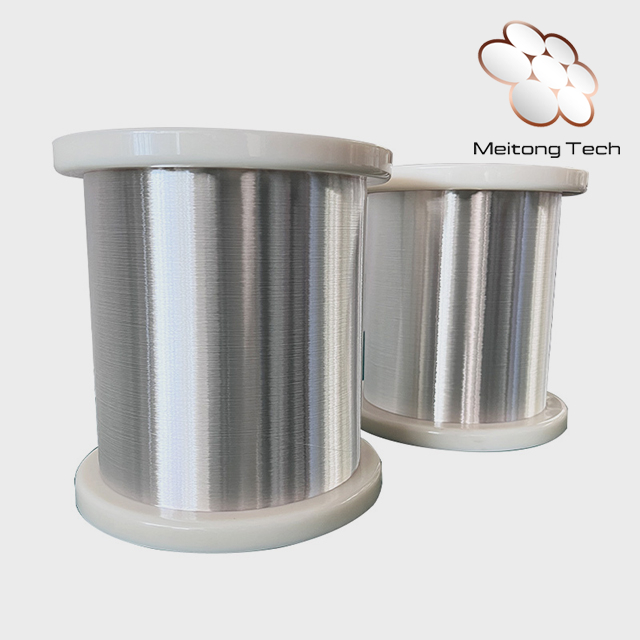
When you choose silver plated copper wire, verification becomes mandatory. Subpar plating compromises system reliability instantly. Hardware engineers rely on specific methods to authenticate materials. First, perform visual and microscopic inspections. Cut the wire precisely. Examine the cross-section under 40x magnification. A clean cross-section should show perfect concentricity. You should see no microscopic gaps between the silver layer and the copper core. Uneven thickness creates mechanical weak spots during bending.
Quality control teams must conduct rigorous physical tests. They often utilize a standard flame test. Tin melts at a much lower temperature than silver. If the metallic coating bubbles or blackens immediately, you likely have counterfeit tinned copper. You can also utilize specific gravity tests. Controlled chemical reagents help verify the silver layer authenticity. Drops of specific acids react differently to silver versus tin. These simple lab tests prevent catastrophic material failures.
Electrical verification provides the final definitive proof. Establish strict electrical resistance benchmarks before assembly. We recommend utilizing a high-precision micro-ohmmeter. You must implement the 4-wire Kelvin resistance measurement method.
Cut exactly one meter of the sample cable.
Strip the ends carefully without scratching the core.
Attach the micro-ohmmeter clamps to the bare ends.
Measure the precise resistance across the length.
Compare these findings against standard theoretical values for your AWG.
Any upward deviation indicates a low-purity core. It could also mean insufficient silver application.
Finding the right base material represents only half the battle. You must evaluate a custom silver plated copper wire supplier based on their broader capabilities. Look far beyond the bare wire alone. Assess their advanced insulation options closely. High-temperature environments frequently require extruded PTFE (Teflon) or FEP jackets. The vendor must apply these jackets at extreme temperatures. They must accomplish this without melting or damaging the delicate silver coating. Ask about their extrusion machinery.
Strict manufacturing tolerances and QA protocols are non-negotiable. Ensure your vendor holds current ISO 9001 certifications. Ask exactly how they track batch-to-batch consistency. A reliable vendor uses laser micrometers during the drawing process. They monitor the diameter constantly in real-time. They should easily provide raw material certificates of origin upon request. Full traceability protects your company against liability. It ensures consistent performance across multi-year production runs.
Supply chain scalability dictates your long-term success. Evaluate the vendor's flexibility early in the design phase. Ask if they provide small prototype sampling runs. Determine if their Minimum Order Quantities (MOQs) align with your production schedule. Lead-time stability remains critical for volume manufacturing. You need a responsive partner. They must scale up production without sacrificing microscopic plating tolerances. Discuss their buffer stock policies for critical raw materials.
A successful purchase requires ongoing integration assistance. Silver plated copper wire factory support is invaluable during the manufacturing rollout. Real-world implementation always presents unforeseen mechanical challenges. Consider common assembly risks on the factory floor. The silver plating can fracture during harsh mechanical stripping processes. Ultrasonic welding might deform the silver layer if frequency settings are incorrect. Factory engineers help troubleshoot these specific termination issues. They provide precise tooling recommendations to keep the plating perfectly intact.
Storage and handling guidance represents another critical support area. Silver naturally reacts with airborne sulfur compounds. This chemical reaction causes tarnish, commonly known as sulfidation. Proper factory support delivers clear guidelines on climate-controlled storage facilities. They will recommend volatile corrosion inhibitor (VCI) anti-tarnish packaging. They help you establish strict shelf-life management protocols for bulk reels. Proper handling prevents cosmetic defects. It keeps your inventory ready for immediate assembly.
Streamline your vendor selection process methodically. Do not rely on marketing brochures alone. Use a structured, logical approach to narrow down your choices. We recommend a strict 3-step shortlisting process.
Initial Vendor Outreach: Request comprehensive compliance documentation and review their ISO certificates.
Sample Evaluation: Order engineering samples specifically for destructive in-house mechanical testing.
Final Approval: Approve the First Article Inspection (FAI) based solely on strict resistance benchmarks.
Specifying this critical material goes far beyond picking a standard AWG size. You must carefully match precise plating tolerances and core purity levels to your application. Thermal limits and electrical demands dictate your final choice. High-frequency applications demand thicker, flawless plating layers.
Keep one final caveat clearly in mind. Cutting initial expenses on poorly plated wire inevitably backfires. It leads directly to massive replacement costs when unpredictable field failures occur. Quality materials protect your brand reputation.
Take decisive action today to secure your engineering supply chain. Request comprehensive technical data sheets from your shortlisted vendors. Order small engineering samples for your next prototype build. Schedule a technical consultation to lock down your exact custom specification requirements.
A: Look closely at the visual luster. Silver exhibits a brilliant, bright white finish. Tin appears noticeably duller and slightly gray. Apply a simple heat test using a soldering iron. Tin melts at a much lower temperature, around 232°C. Silver withstands extreme heat up to 961°C without melting. Their oxidation behaviors also differ significantly under thermal stress.
A: Yes, it definitely tarnishes over time. Silver reacts naturally with atmospheric sulfur to form silver sulfide. This creates a dark, unappealing cosmetic blemish. However, unlike copper oxide which acts as an electrical insulator, silver sulfide remains highly conductive. Your electrical performance and high-frequency signal transmission are rarely impacted by this discoloration.
A: Separating the two metals presents significant metallurgical difficulties. Silver and copper possess completely distinct melting points. They also have different specific gravities. If you melt them together without specialized chemical separation techniques, you unintentionally create a new, useless alloy. This ruined scrap completely loses the distinct electrical benefits of the original pure metals.
A: From a strict, measurable standpoint, yes. The skin effect ensures it transmits high-frequency audio signals much more efficiently than standard bare copper. However, subjective audio changes, like hearing a "brighter" sound profile, depend heavily on your speaker system. The overall impedance, amplifier pairing, and individual listener preference heavily influence the final perceived audio quality.


