
Views: 0 Author: Site Editor Publish Time: 2026-08-10 Origin: Site


Modern automotive design faces rapidly tightening thermal and electrical constraints. You see this most critically around EV traction inverters, DC-DC converters, and high-voltage power distribution networks. Bare copper and standard tin-plated alternatives quickly show their limits under continuous high-temperature stress. Once exposed to intense heat cycles, standard metals suffer from severe oxidation. They also experience a sharp degradation of mechanical integrity. We must look toward robust barrier metals to protect vehicle lifespans. This article objectively evaluates the electrical, thermal, and mechanical viability of nickel plating for automotive power electronics routing. You will learn how these advanced wires defend against oxidation. We will explore how they balance conductivity trade-offs in high-voltage designs. We will also examine crucial assembly realities. This knowledge helps you specify the right materials for next-generation vehicle architectures.
Thermal Ceiling: Nickel plating protects copper from severe oxidation at continuous operating temperatures ranging from 250°C to 450°C (depending on plating thickness).
Conductivity Trade-offs: The addition of nickel slightly reduces overall conductivity (typically to ~96%–98% IACS) compared to bare copper, requiring precise ampacity calculations in high-draw EV systems.
Mechanical Realities: The hardness of nickel introduces specific tooling and termination considerations to prevent crimp failure or premature die wear during wire harness assembly.
Cost-to-Performance Ratio: Offers a scalable middle ground between standard tin (low temp/low cost) and silver (high conductivity/high cost) for extreme-heat automotive zones.
Automotive power electronics continue to shrink in overall footprint. At the exact same time, they must handle drastically higher voltages. Today's 400V and 800V architectures push ambient temperatures inside confined vehicle spaces far beyond standard wire limits. Engineers face a tough business and engineering problem. How do you route power safely when the thermal density is this extreme? Packaging constraints force wiring harnesses closer to massive heat generators.
Bare copper oxidizes rapidly once ambient temperatures climb above 100°C. Tin plating offers a slight thermal buffer. However, tin begins to degrade and soften near 150°C. This degradation risks severe connection resistance at the terminal joints. In extreme cases, melting tin triggers dangerous thermal runaway inside tight inverter housings. Your designs simply cannot tolerate these material failures.
Here, we see the critical role of High Temperature Automotive Wire. You need robust barrier metals to maintain long-term molecular integrity. A tough nickel plating layer prevents copper diffusion during extreme thermal cycling. We rely on these advanced barriers to protect the core conductor. This protection stops rapid degradation and keeps power flowing smoothly across the vehicle lifecycle.
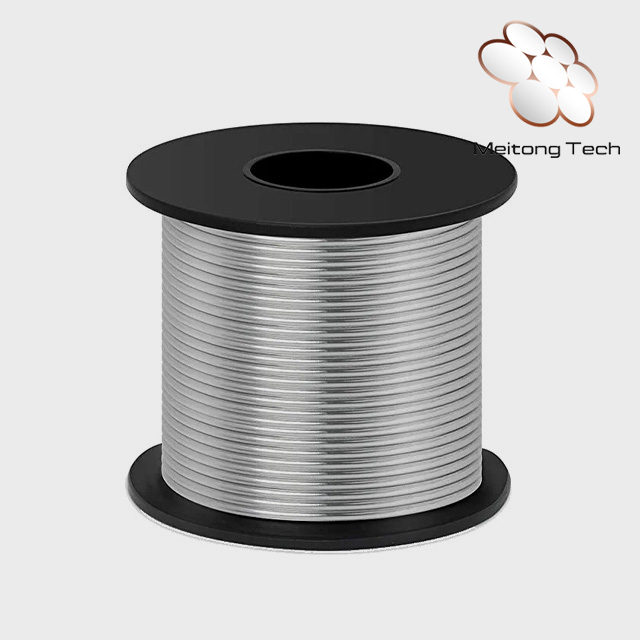
Engineers often turn to Nickel Plated Copper Wire for high-stress routing zones. How exactly does it work? The nickel layer acts as a highly effective diffusion barrier. It physically prevents oxygen from reaching the sensitive copper core. This crucial mechanism maintains stable contact resistance over the vehicle's entire lifespan. Copper naturally wants to oxidize when heated. Nickel effectively locks the copper structure in place.
We categorize wire performance strictly based on plating thickness. Manufacturers typically apply nickel at 2%, 4%, 10%, or 27% by weight. Higher nickel percentages unlock significantly higher continuous temperature ratings. A standard 2% coating survives standard heat. Meanwhile, a robust 27% nickel layer can withstand up to 450°C.
Plating Thickness vs. Temperature Classifications
Nickel Plating Weight (%) | Typical Max Continuous Temp (°C) | Primary Automotive Application Zone |
|---|---|---|
2% | 250°C | Engine bays and standard battery links |
4% | 250°C - 300°C | Proximity to exhaust sensors and dense harnesses |
10% | 350°C - 400°C | Direct EV traction inverter routing |
27% | 450°C | Extreme localized heat sources and aerospace-grade zones |
We must transparently assess the electrical performance trade-offs. Nickel introduces a slight baseline conductivity drop compared to bare copper. It typically hovers around 96% to 98% IACS. Furthermore, high-frequency applications face the notorious "skin effect." In PWM (Pulse Width Modulation) motor drives, current pushes toward the outer edges of the conductor. Since current travels through the less conductive nickel layer, you might see a marginal impedance increase. You must adjust your ampacity calculations to account for this drop.
Nickel provides excellent chemical and environmental defenses. It resists harsh automotive fluids effortlessly. Brake fluid, coolant, and oils do not degrade the plating. It prevents dangerous outgassing in vacuum states. It also withstands corrosive byproducts generated near heavy battery management systems.
Silver and nickel both serve as premium high-performance platings. However, they solve entirely different engineering problems on the vehicle. Silver-plated wire offers absolutely superior conductivity. It frequently reaches 100% or more IACS. Yet, silver maxes out thermally at roughly 200°C. It cannot survive the immediate environment of a heavy traction inverter.
Nickel takes a different path. It sacrifices minor conductivity for a drastically higher thermal ceiling. This makes it ideal for true high-heat zones where silver would quickly fail.
Environmental vulnerability separates the two metals even further. Silver is highly susceptible to tarnishing. It suffers from severe sulfur corrosion in damp or chemically active automotive environments. A tarnished silver joint loses its conductivity benefits. Nickel remains chemically inert. It survives harsh engine bays and damp battery boxes without tarnishing.
Cost scalability also plays a huge role in production planning. Silver experiences frequent and massive pricing volatility on the global commodities market. Nickel offers much more predictable, scalable cost modeling. This financial stability greatly benefits mass-market OEM platforms requiring millions of feet of wire.
Comparing High-Performance Barrier Metals
Performance Feature | Silver Plated Conductor | Nickel Plated Conductor |
|---|---|---|
Electrical Conductivity | Superior (100%+ IACS) | Slightly Reduced (~96-98% IACS) |
Maximum Heat Tolerance | Moderate (Up to ~200°C) | Extreme (Up to 450°C) |
Chemical Corrosion Resistance | Vulnerable to Sulfur / Tarnishing | Highly Inert and Environmentally Stable |
Market Pricing Model | Highly Volatile | Predictable and Scalable |
The selection logic is clear. Use silver for high-frequency signal integrity in moderate heat. Specify nickel for raw thermal endurance near heavy power electronics. Do not mix up their use cases.
Upgrading your harness material to nickel brings new assembly realities. Nickel is significantly harder than standard tin or bare silver. This increased hardness accelerates physical wear on your cutting blades. It also wears down your crimping dies much faster. Assembly teams must prepare for these mechanical changes before production begins.
Termination challenges require your direct attention. The harder metallic plating increases the risk of micro-fractures inside the wire. These fractures happen during tight-radius bending. They also occur from applying improper crimping forces. A fractured conductor creates a high-resistance bottleneck.
Let us review essential mitigation strategies for modern assembly lines:
Use specially hardened steel crimping dies to prevent premature tool wear and maintain precision.
Specify terminal types explicitly designed to bite through tougher metallic layers without slipping.
Adjust your crimp force parameters to ensure a gas-tight seal without fracturing the delicate copper strands underneath.
Validate ultrasonic welding compatibility when attaching heavy battery or inverter lugs to the harness.
System integration requires deep care. You must address potential galvanic corrosion. This reaction occurs if you mate nickel with incompatible connector materials in damp environments. Always verify your connector housing seals. Check your terminal material compatibility before final engineering sign-off. Mismatched metals will corrode quickly under the hood.
Choosing the correct nickel plated copper wire automotive supplier directly dictates your project's success. Start by deeply evaluating their core specifications. Match the plating thickness strictly to your system's thermal modeling. For instance, follow ASTM B355 standards to align the wire perfectly with your specific inverter or motor housing temperatures. Do not guess on plating thickness.
Supplier verification prevents massive manufacturing headaches down the road. Look for manufacturers capable of proving true wire concentricity. They must guarantee uniform plating thickness around the entire copper core. Uneven plating creates dangerous localized hot spots under continuous high current loads.
Ensure incoming materials meet strict global compliance standards. The wire must pass standard RoHS and REACH regulations. It should also meet specific automotive OEM standards. Look closely for LV 112 and ISO 6722 certifications for high-temp classifications.
Take these exact next-step actions when qualifying a new wire vendor:
Request specific AWG samples tailored to your exact voltage and power rating limits.
Obtain cross-sectional micrographs of the wire plating to visually verify concentricity.
Review the supplier's quality control documentation for raw material sourcing and purity.
Initiate rigorous thermal cycle validation testing in your own internal labs using real-world loads.
Careful vetting ensures you receive consistent, reliable spools every time.
Nickel plating is not a universal upgrade for every vehicle circuit. Instead, it serves as a highly specific, engineered solution. It easily dominates the extreme thermal environments immediately surrounding power electronics. Your design success depends completely on balancing vital thermal gains against minor conductivity losses. You must also adjust your physical assembly tooling to handle the harder surface metal. We strongly recommend aligning wire sourcing early in your hardware design phase. Early alignment helps your engineering team accurately calculate critical ampacity limits. It also gives your manufacturing team ample time to secure the correct hardened crimp tooling. By planning ahead, you ensure durable, safe, and highly efficient power distribution across any modern EV architecture.
A: The maximum operating temperature depends heavily on the specific plating thickness percentage. Manufacturers apply nickel from 2% up to 27% by weight. A 2% coating safely handles continuous temperatures around 250°C. If you specify a heavily plated 27% configuration, the wire can withstand extreme environments up to 450°C.
A: Yes, nickel is inherently harder than bare copper or tin. However, standard stranded wire configurations still maintain excellent overall flexibility. You will find minimum bend radii might be slightly stricter compared to bare copper. Proper harness routing easily accommodates these minor stiffness changes without causing layout issues.
A: High-frequency applications experience the skin effect. During these cycles, current travels predominantly along the outer layer of the conductor. Because nickel possesses a naturally higher electrical resistance than copper, this phenomenon can marginally increase overall impedance. Engineers must account for this slight efficiency drop when designing PWM motor drives.
A: Yes. Because nickel plating adds significant material hardness, standard crimping tools wear out quickly. We highly recommend using hardened steel dies. You must also apply specific crimp profiles. These specialized tools prevent joint failure, avoid conductor micro-fractures, and stop premature tool wear on busy assembly lines.


