
Views: 0 Author: Site Editor Publish Time: 2025-09-01 Origin: Site


For engineers designing high-frequency or RF systems, signal integrity is often the decisive factor between a stable, high-performance system and one prone to losses and interference. Silver Plated Copper Stranded Wire offers a high-conductivity copper core with a silver surface layer, combining thermal stability, low contact resistance, and long-term reliability. Meitong Conductivity Alloy Materials (Jishui County) Co., Ltd. has developed advanced silver-plated and twisted wire solutions optimized for microwave, RF, and high-speed data applications. In this article, we explore how silver coating impacts high-frequency performance, the underlying physics, manufacturing considerations, and practical selection criteria to help engineers choose the right wire for their designs.
At high frequencies, the flow of alternating current concentrates near the conductor’s surface, a phenomenon known as the skin effect. The higher the frequency, the thinner this effective conductive layer. Copper is an excellent conductor, but silver, with its higher electrical conductivity, further reduces resistance at the conductor surface. By applying a thin silver layer over a copper core, Silver Coated Copper Twisted Wire minimizes resistive losses where they matter most, ensuring cleaner signal transmission in RF and microwave ranges. This effect is particularly pronounced in frequencies above 1 GHz, where even minor surface imperfections can significantly impact performance. In addition, the combination of multiple strands in twisted or stranded wire can help maintain uniform current distribution, enhancing overall HF stability.
The thickness and uniformity of silver plating directly influence characteristic impedance, insertion loss, and return loss. Uneven plating can introduce microvariations that increase impedance mismatch, leading to reflections and signal degradation. For twisted or stranded wire designs, maintaining uniform silver coverage across all strands is critical to achieving predictable electrical performance. Optimal plating thickness balances cost with sufficient surface conductivity—too thin, and benefits are lost; too thick, and manufacturing cost rises without significant improvement in HF performance. Engineers must also consider surface roughness, as microscopically rough surfaces can create additional RF losses, especially at microwave frequencies.
Engineers should request lab test metrics to validate the high-frequency performance of Silver Plated Copper Stranded Wire. Key measurements include return loss, insertion loss, and phase stability across relevant frequency bands. Reputable suppliers, such as Little Falls Alloys, provide traceable test reports to demonstrate compliance with specifications. Additional checks may include time-domain reflectometry (TDR) and vector network analysis (VNA) results to assess impedance continuity and identify reflections or discontinuities along the wire. Asking for full test results, including visual inspections for plating uniformity and surface roughness, ensures the wire meets HF application requirements and reduces the risk of field failures.
Different plating materials offer distinct trade-offs. Gold excels in corrosion resistance and solderability but has higher material costs. Tin provides good solderability but limited high-frequency performance, while nickel offers durability with increased insertion loss due to lower conductivity. Silver strikes a balance by delivering ultra-high surface conductivity, low contact resistance, and thermal stability up to 200°C, making it ideal for RF/microwave applications where signal loss must be minimized. Moreover, silver’s natural resistance to tarnish ensures consistent performance over long-term deployments in aerospace, UAV, and industrial electronics applications.
When specifying wiring for prototypes or production assemblies, engineers must weigh cost against performance. Silver Plated Copper Stranded Wire often represents the optimal choice for high-frequency applications due to superior HF transmission efficiency and long-term stability, even when compared to more expensive gold-plated options. Companies like maf.com highlight that silver plating provides an excellent compromise between electrical performance, mechanical robustness, and cost-efficiency. For prototypes, using silver-plated wire helps verify performance before committing to larger production runs without incurring unnecessary costs from alternative finishes.
Silver plating quality begins with the manufacturing process. Electroplating is the most common method for Silver Coated Copper Twisted Wire, offering precise thickness control and uniform coverage. For stranded wire, reel-to-reel processing ensures consistent plating across all strands and wire lengths, minimizing variations that could affect high-frequency performance. Advanced plating lines also incorporate continuous monitoring to detect deviations in real time, reducing the likelihood of batch-to-batch variability that can compromise HF signal integrity.
High-frequency signal integrity requires attention to key QA metrics: plating thickness, adhesion, surface roughness, and impedance control. These checks are essential for ensuring that the conductor behaves predictably under operational conditions. Engineers should confirm that suppliers conduct these tests as part of their standard quality control, including cross-sectional inspection, microhardness testing, and impedance verification over full reel lengths. Accurate QA ensures consistent signal propagation in RF assemblies, reducing the chance of intermittent performance degradation in the field.
When sourcing Silver Plated Copper Stranded Wire, RF engineers should include specific queries in their requests for quotation: What is the plating thickness tolerance? How is uniformity verified? Are insertion loss and return loss test reports available? Can long-term thermal stability and environmental exposure be demonstrated? Ensuring traceable, verifiable performance metrics is critical for reliable deployment in RF or microwave systems, particularly in aerospace, military, or medical electronics applications.
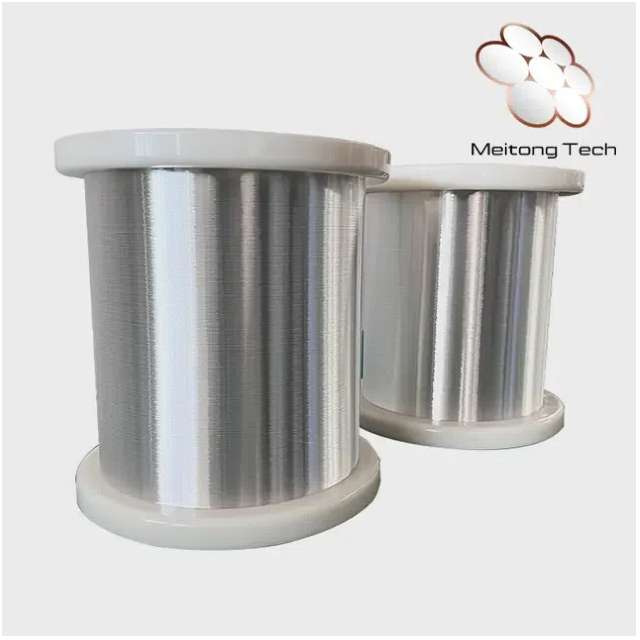
Silver-plated conductors are particularly advantageous in coaxial cores, RF switch wiring, and interconnects requiring high signal fidelity. For the center conductor in coaxial cables, the silver layer ensures minimal resistive loss. In braided shielding, silver plating maintains effective RF shielding while keeping mechanical flexibility and corrosion resistance. Twisted wire arrangements also contribute to reducing crosstalk, which is critical in densely packed cable assemblies for high-speed data transfer.
Losses are often introduced at connectors and terminations. Engineers can reduce these losses by maintaining consistent plating coverage and using properly designed contacts compatible with silver surfaces. Twisted wire geometries help maintain balanced impedance and minimize signal reflections over long cable runs. Attention to termination techniques, such as soldering or crimping, also impacts overall HF performance, making silver plating a reliable choice to mitigate common connector losses.
Silver Plated Copper Stranded Wire is resistant to oxidation and offers excellent long-term stability under typical environmental conditions. Regular visual inspections can identify physical wear or damage, but silver plating itself requires minimal maintenance. For applications in aerospace, military, or high-reliability industrial electronics, the combination of copper core and silver surface provides robust HF performance over the product lifecycle. Proper handling and routing in assemblies ensure consistent performance under vibration, thermal cycling, or flexing conditions.
Frequencies above 1 GHz: Prioritize silver-plated stranded or twisted wire for minimal resistive losses.
Insertion-loss-sensitive applications: Request supplier test reports for insertion loss and return loss.
Harsh environments or high thermal load: Ensure silver plating is stable up to 200°C or higher.
Flex or dynamic use: Verify plating adhesion and mechanical flexibility on twisted or stranded configurations.
Shielding-sensitive designs: Consider silver-plated braid for improved RF shielding and reduced crosstalk.
Request a sample reel with a corresponding insertion-loss report.
Specify frequency range, operating temperature, and cable geometry.
Ask for plating thickness, adhesion, and surface roughness measurements.
Validate return loss, phase stability, and TDR/VNA analysis across the intended HF band.
Include recommendations for termination compatibility and connector design.
Silver Plated Copper Stranded Wire offers a practical, high-performance solution for high-frequency signal applications, ranging from RF/microwave assemblies to aerospace and robotic electronics. The combination of a copper core and silver surface ensures low insertion loss, consistent impedance, thermal stability, and long-term reliability. Meitong Conductivity Alloy Materials (Jishui County) Co., Ltd. provides expertly manufactured Silver Coated Copper Twisted Wire and stranded wire solutions, designed to meet demanding HF requirements. Contact us today to request sample reels, detailed insertion-loss reports, and technical guidance for your next RF project.


