
Views: 0 Author: Site Editor Publish Time: 2025-08-27 Origin: Site


In the realm of electrical wiring, the debate between Copper Clad Aluminum (CCA) and pure copper has been a topic of interest for engineers and industry professionals alike. As technology advances, the demand for cost-effective and efficient materials increases, leading to the exploration of alternatives like CCA. This article delves into the characteristics, advantages, and limitations of CCA stranded wire compared to traditional copper wire. For those interested in understanding more about the intricacies of CCA stranded wire, the Copper Claded Aluminium Stranded Wire offers a comprehensive overview.
CCA stranded wire is composed of an aluminum core surrounded by a copper cladding. This unique composition allows it to combine the benefits of both metals. The aluminum core provides a lightweight structure, while the copper cladding ensures excellent conductivity. This combination makes CCA stranded wire a popular choice in various applications, particularly where weight and cost are significant considerations.
The conductivity of CCA stranded wire is approximately 85% of that of pure copper wire. This level of conductivity is generally sufficient for many applications, making it a viable alternative to copper, especially in telecommunications and networking industries. Furthermore, the tensile strength of CCA wire is enhanced by the copper layer, which provides additional durability and resistance to physical stress.
One of the primary advantages of CCA stranded wire is its cost-effectiveness. The price of copper has been on the rise, making it an expensive option for large-scale projects. CCA wire, with its aluminum core, offers a more affordable solution without significantly compromising on performance. This cost benefit is particularly appealing in industries where budget constraints are a major concern.
Additionally, the lightweight nature of CCA stranded wire makes it easier to handle and install. This can lead to reduced labor costs and time savings during installation. In applications where weight is a critical factor, such as in aerospace or automotive industries, CCA wire's reduced weight can contribute to overall efficiency and performance.
Despite its advantages, CCA stranded wire does have limitations. One of the main concerns is its lower conductivity compared to pure copper wire. While the conductivity of CCA is adequate for many applications, it may not be suitable for high-performance electrical systems that require maximum efficiency. In such cases, pure copper remains the preferred choice.
Another limitation is the potential for galvanic corrosion. When CCA wire is used in environments where it comes into contact with moisture or other metals, there is a risk of corrosion at the interface between the copper and aluminum layers. This can compromise the integrity of the wire over time, leading to potential failures in the electrical system.
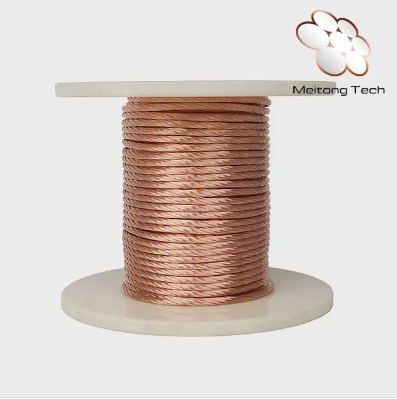
To fully understand the position of CCA stranded wire in the market, it is essential to compare it directly with pure copper wire. Copper wire is renowned for its excellent conductivity, making it the standard choice for most electrical applications. Its high conductivity ensures minimal energy loss, which is crucial for high-performance systems.
However, the high cost of copper can be a limiting factor, especially in large-scale projects. This is where CCA stranded wire presents a compelling alternative. While it does not match the conductivity of copper, its cost savings and lightweight properties offer significant advantages in specific applications. For instance, in telecommunications, where signal transmission is critical but does not require the full conductivity of copper, CCA wire can be an ideal choice.
CCA stranded wire has found its niche in several industries. In telecommunications, it is used extensively for coaxial cables, where its lightweight and cost-effective nature are significant benefits. The automotive industry also utilizes CCA wire for wiring harnesses, where weight reduction is a priority.
A case study in the telecommunications sector demonstrated that using CCA stranded wire for network cabling resulted in a 30% reduction in material costs without compromising on performance. This cost saving allowed the company to allocate resources to other critical areas, enhancing overall project efficiency.
In conclusion, CCA stranded wire offers a viable alternative to pure copper wire in specific applications. Its cost-effectiveness, lightweight nature, and adequate conductivity make it an attractive option for industries where these factors are prioritized. However, it is essential to consider the limitations of CCA wire, such as its lower conductivity and potential for corrosion, when deciding on its use. For those seeking a comprehensive understanding of CCA stranded wire, the Copper Claded Aluminium Stranded Wire provides valuable insights.
1. What is CCA stranded wire?
CCA stranded wire is a type of electrical wire that consists of an aluminum core with a copper cladding. It combines the benefits of both metals, offering a lightweight and cost-effective alternative to pure copper wire.
2. How does the conductivity of CCA wire compare to copper wire?
The conductivity of CCA stranded wire is approximately 85% of that of pure copper wire. While it is lower, it is often sufficient for many applications, particularly in telecommunications and networking.
3. What are the advantages of using CCA stranded wire?
CCA stranded wire is cost-effective, lightweight, and offers adequate conductivity for many applications. These properties make it a popular choice in industries where cost and weight are critical factors.
4. Are there any limitations to using CCA stranded wire?
Yes, CCA stranded wire has lower conductivity compared to pure copper and may not be suitable for high-performance systems. It also has a risk of galvanic corrosion in certain environments.
5. In which industries is CCA stranded wire commonly used?
CCA stranded wire is commonly used in telecommunications for coaxial cables and in the automotive industry for wiring harnesses, where its lightweight and cost-effective nature are beneficial.
6. How does CCA wire contribute to cost savings in projects?
By using CCA stranded wire, projects can reduce material costs by up to 30%, allowing resources to be allocated to other critical areas without compromising performance.
7. Where can I find more information about CCA stranded wire?
For more detailed information about CCA stranded wire, you can visit the Copper Claded Aluminium Stranded Wire page.


